

NDA for Business Sale, Why They Are Essential
A NDA for business sale or Non-Disclosure Agreement is a legally binding contract to protect confidential information shared between parties in a business transaction. Its main purpose is to prevent the unauthorized use or disclosure of sensitive data, such as financial records, trade secrets, or business strategies. In a business transaction, NDAs ensure that all parties involved understand their responsibility to maintain confidentiality, creating a secure environment for open communication. The NDA outlines what information is considered confidential, the obligations of each party, and the duration for which the confidentiality must be maintained, thereby safeguarding valuable assets from misuse.
NDA for business sale is especially critical because it provides both the buyer and the seller with the necessary protection to discuss sensitive information openly. By establishing clear boundaries around what can and cannot be shared, NDAs help prevent leaks of critical business data that could undermine the sale or harm the parties involved. This sense of security fosters trust and transparency during the negotiation process, ultimately facilitating a smoother and more successful transaction. This article will explore why NDAs are essential in business sales, discussing how they protect the interests of both parties and contribute to the overall success of the transaction by ensuring confidentiality and reducing legal risks.
The Essential Role of NDA for Business Sale
Non-Disclosure Agreements (NDAs) play a vital role in protecting confidential business information during the sales process. They are designed to safeguard intellectual property, financial data, customer lists, and other sensitive assets that could be detrimental to a business if disclosed. By preventing the unauthorized use or sharing of this information, NDAs help ensure that the seller’s trade secrets and proprietary data remain secure. This protection is especially important in maintaining a competitive advantage, as NDAs prevent valuable business insights from falling into the hands of competitors, which could potentially weaken the seller’s market position.
In addition to safeguarding sensitive information, NDAs also help build trust between the buyer and seller. By outlining clear confidentiality obligations, NDAs create a foundation of trust that both parties are committed to keeping sensitive information secure. This trust is crucial in fostering honest and transparent negotiations, where both parties can freely share information needed for due diligence without worry. NDAs ensure that any exchange of information during the negotiation process remains focused on achieving a successful transaction while protecting each party’s business interests.
Legal and Financial Protection Through NDAs
NDAs provide critical legal protection by establishing enforceable contracts that bind the parties to maintain confidentiality. These agreements outline the specific terms and conditions under which confidential information can be shared, ensuring that both parties understand their legal obligations. In the event of a breach, the NDA ensures that there are legal consequences, which can include financial penalties or other remedies. This legal framework helps prevent the unauthorized disclosure of sensitive business information and provides a clear course of action if confidentiality is violated, thus reinforcing the seriousness of the agreement.
In addition to legal protection, NDAs significantly minimize the risk of litigation by preventing disputes and lawsuits that could arise from the misuse or leaking of confidential information. Without an NDA, conflicts increase, especially if proprietary information is disclosed to the wrong parties. Financially, the implications of such leaks can be severe, ranging from a loss of client trust to significant regulatory fines or reputational damage. NDAs help mitigate these risks by ensuring that confidential information remains protected, providing both parties with a clear understanding of the consequences of a breach and minimizing the financial risks associated with the transaction.
Practical Benefits of NDA for Business Sale
One of the key practical benefits of NDAs in business sales is the protection they offer against any leakage of sensitive information. During the early stages of a transaction, parties often share critical data such as financial records, business strategies, and operational plans to facilitate discussions and negotiations. Without an NDA in place, there is a significant risk that this confidential information could be prematurely leaked, potentially harming the transaction or the business’s market position. By ensuring that both parties are legally bound to confidentiality, an NDA prevents such leaks, allowing for more secure and productive discussions that protect the integrity of the sale.
NDAs also play a crucial role in facilitating a smooth and secure due diligence process. Due diligence requires the exchange of highly sensitive documents, including contracts, financial statements, intellectual property rights, and other proprietary information. NDAs ensure that these documents are handled with the necessary care and kept confidential, thereby reducing the risk of data misuse. Furthermore, NDAs not only protect the immediate interest involved in the sale but also safeguard the future business prospects of both parties. By preventing competitors from gaining access to confidential product plans or other strategic information, NDAs help preserve the long-term success and security of the business for both the buyer and seller.
How NDA for Business Sale Benefits Both Buyers and Sellers
NDAs provide significant protection for the seller by preventing the unauthorized use or disclosure of valuable intellectual property, proprietary processes, and other sensitive business information. During the sale process, sellers often disclose critical business assets, including trade secrets, client data, and operational strategies. An NDA ensures that this information remains secure and is not exploited by the buyer or third parties. By maintaining confidentiality, the seller’s business value is preserved, reducing the risk of harm to their reputation, competitive advantage, or market position. This protection ensures that the business remains intact and continues to hold its value until the sale is completed.
For buyers, NDAs offer access to the confidential information needed to make an informed purchasing decision. During the due diligence phase, the buyer must evaluate the business’s financial health, intellectual property, and other key assets to assess the risks and opportunities involved. An NDA ensures that the buyer can review sensitive data without the fear that it will be misused or leaked, which could disrupt the buyer’s operations after the sale. Additionally, NDAs create a fair and balanced negotiation environment by ensuring that both parties can share information with confidence, knowing that it will only be used for legitimate purposes related to the transaction. This fosters trust and ensures a transparent and equitable process for both buyer and seller.
Potential Pitfalls Without an NDA
Without an NDA in a business transaction, several potential pitfalls can jeopardize the success of the deal. One major risk is the possibility of miscommunication or misunderstandings between the parties involved. Without a clear agreement outlining the scope of confidentiality, both parties may have different expectations about what information can be shared, leading to confusion or accidental breaches. These misunderstandings can erode trust and cause delays or even derail the transaction altogether. In the absence of an NDA, informal conversations or documents may be misconstrued, resulting in unintended disclosures that compromise the integrity of the sale.
Another significant danger is the lack of accountability. Without the legal enforce ability of an NDA, parties may not feel compelled to adhere to confidentiality standards, increasing the likelihood of information leaks or misuse. Without clearly defined penalties for breaches, there is little incentive for either party to handle sensitive information responsibly. This absence of legal structure can lead to a lack of commitment to the agreement, which may result in a party sharing proprietary information with competitors, stakeholders, or other unauthorized individuals. Such actions could not only disrupt the transaction but also harm the long-term business operations of both parties, leaving them vulnerable to financial and reputational damage.
The Bottom Line
In conclusion, Non-Disclosure Agreements (NDAs) play an important role in maintaining the confidentiality, security, and trust essential for a successful business sale. By protecting sensitive information and ensuring that both parties are legally bound to confidentiality, NDAs create a secure environment for clear negotiations. They help prevent the unauthorized use or disclosure of critical business data, safeguarding intellectual property, financial records, and other valuable assets. In this way, NDAs are not just a formality, but a key element in building trust between the buyer and seller, ultimately contributing to the smooth execution of the transaction.
At V-aid, we prioritize your privacy and confidentiality, whether you’re buying or selling a business. We understand the importance of protecting sensitive information throughout the process and are committed to ensuring your peace of mind. With a focus on discretion, integrity, and support, V-aid is here to guide you every step of the way, offering expert assistance to help you successfully buy or sell your business while safeguarding your interests.
Read More
Small Business Private Lenders: Tips for Finding the Right Lender
Small business private lenders can make or break a business transaction. Buying a business is a complex journeys that involve the identification of just the right opportunity, negotiation of terms, and finalization of the purchase. This, of course, constitutes a very important part of such a process: finding financing, given that this determines not only the feasibility of the acquisition but also the financial health of the new venture.
The right financing opens the door to growth and success, while the wrong choice can lead to a myriad of challenges later on. In this blog, we try walking the prospective business buyer through critical determinants for the right lender-one who can guarantee favorable rates, responsive communication, and expert support that assure a smooth, successful acquisition.
The Importance of Choosing The Right Lenders
The lenders are very important in the process of acquisition, as they represent the main source of finance for buyers. Lenders evaluate the financial viability of the acquisition by determining the creditworthiness of the buyer, the financial health of the business, and the conditions of the market in general. Detailed documentation and analysis are generally required to establish that the buyer is in a position to sustain the loan and that the business has the potential for profitability.
In addition to providing the required funds, lenders also guide transactions by counseling buyers through the complexity of financing options and structuring deals according to their needs and requirements. This would, therefore, make much difference when there is a strong partnership with a proper lender for the acquisition process in order to have a successful transition.
Different Lenders, Different Rates
Securing the best interest rate is one of the major aspects of purchasing a business in order to minimize overall financing costs. A small difference in rates makes all the difference in both your monthly payments and the total amount paid over the course of the loan. Many times, interest rates can be all over the board depending on the lender due to their own practices in assessing risk associated with loans, market conditions, and specific terms of the loan itself.
Comparisons should be made by buyers by getting quotes from a number of different lenders, carefully considering the APR interest rate plus any fees. Also, consider prepayment penalties and any flexibility in the terms with regard to repayment options, so that you make a fully-rounded decision that will meet your financial needs.
Communication is Key
Communication at the proper time holds the key to any business acquisition process; it keeps the parties informed at each and every stage of the transaction. A responsive lender can go a long way in making such a transaction far smoother, addressing any questions, or providing documentation and necessary support to work out complex financing options. Such a level of engagement builds confidence and can even speed up the process of approvals, which is very important in today’s competitive market.
Viewed negatively, the absence of a response may lead to several delays that may compromise a sale or lead to misunderstandings over loan terms or maybe even a lost opportunity. For instance, if a lender is not in a position to promptly respond to requests for information, the pace of negotiation might be slowed down, or buyers might remain without some crucially important knowledge, which is very important in making valid decisions regarding this type of acquisition.
Flexibility Makes All the Difference
Flexibility is one of the important attributes a lender should have, considering that every business acquisition carries with it different circumstances and challenges that need particular financing solutions. A lender who is willing and able to adapt to the specific needs of the buyer-be it accommodating a fluctuating cash flow, adjusting repayment terms, or offering alternative financing structures-can indeed make quite a difference in the success of the acquisition process as a whole.
Creative financing options can include seller financing, or tailored repayment plans, which could better equip buyers to overcome surprises that stand in the way of maximizing their investment. A flexible lender can help the buyer tap into options that would better fit their personal financial circumstances and make the business more sustainable and profitable.
Transparency Sets Clear Expectations
Transparency about lending is paramount to ascertain that buyers are aware of the terms and conditions of financing.
This covers things like interest rates, payment schedules, fees, and even penalty clauses in clearly understandable language so that no surprises occur along the way. It is the right of the consumer to ask questions before signing up for any form of loan, including but not limited to how much it costs as a whole, the implications of variable rates as opposed to fixed rates, and lastly, any other hidden charges that might come up in due course.
Best Questions to Ask Your Small Business Private Lenders
You should be proactive, but not rush to find the right lender for your business acquisition. First, get recommendations from a trusted advisor, including a business broker or financial consultant. Second, research online to identify an appropriate lender that specializes in business financing.
Jot down a shortlist, follow through, and schedule an initial consultation to see if they will be a good fit for you. In these meetings, ask the following pertinent questions:
- What types of loans do you offer for business acquisitions?
- Can you provide a detailed breakdown of fees and interest rates?
- How long does the approval process typically take?
- What is your experience with financing similar transactions?
- How do you approach customer service and communication during the loan process?
- Are there any prepayment penalties or flexibility in repayment options?
- Can you outline the documentation required for the loan application?
- What criteria do you use to assess creditworthiness for business loans?
Begin Your Small Business Lending Adventure with V-AID
In conclusion, selecting the right lender is among the most crucial decisions in the acquisition phase of a business that may affect one’s future financially, as well as the overall success of the new venture. By placing interests such as interest rates, responsiveness, transparency, and flexibility first, buyers are put in a better position to make informed choices that best match their particular needs.
V-AID specializes in guiding qualified buyers through the financing process. We leverage our extensive network of lenders to connect you with the most suitable options, ensuring you secure competitive rates and exceptional service.
Our team is dedicated to helping you navigate this crucial aspect of your business acquisition, so you can focus on achieving your goals. Let us be your buying guide and assist you in selecting the ideal lender to set you on the path to success.
Read More

Absentee Owner vs. Hands-On Owner
Absentee Owner vs. Hands-On Owner
It’s no secret that owning a business comes with significant responsibilities, but what’s often overlooked is how the approach to ownership—whether hands-on or absentee—can influence the business’s success and value. Both hands-on and absentee ownership can lead to a lucrative and thriving business, but the way each is managed can either enhance or diminish its worth. In this article, we’ll explore these two ownership styles, examining their differences, pitfalls, and benefits, to help business owners choose the path that best supports their goals and maximizes their business’s potential.
Hands-On Owner
Hands-on ownership (or active involvement) is simply referring to a business owner being physically present at the place of business, whether that’s operating the business or serving as upper management over a team of employees. While the necessity for hands-on involvement may differ based on the business type, or circumstances may not allow it, for most owners, the benefits of being actively engaged cannot be overstated. When owners are actively involved in daily operations, they can ensure that every aspect of the business aligns with their vision and standards. Such involvement is typically a factor in maximizing the income potential of a business for several reasons.
Hands-on Owner Benefits
- Elevating Service Quality: An engaged owner brings personal investment into the business, leading to meticulous attention to detail and a genuine concern for customer satisfaction. This often results in higher service standards, increased customer loyalty, and repeat business.
- Fostering Employee Development: Hands-on owners play a crucial role in mentoring and training employees, which can improve performance, increase job satisfaction, and reduce turnover. This investment in staff development leads to a more skilled and motivated workforce that will also lead to improved customer satisfaction.
- Enhancing Operational Efficiency: Direct involvement allows owners to oversee inventory management and work scheduling, making informed decisions that streamline operations, reduce waste, and control costs, ultimately increasing the profitability of the operation.
- Identifying Growth Opportunities: Hands-on owners can be better positioned to identify and implement simple growth strategies as needed, keeping their business ahead of the competition.
Drawbacks of Hands-On Ownership
- Time and Energy Demands: Hands-on ownership demands a significant investment of time and energy, which can be particularly challenging in businesses with complex or labor-intensive operations. The owner’s deep involvement in every aspect of the business can be overwhelming and may lead to burnout, reducing both personal well-being and the ability to focus on strategic growth.
- Limited Flexibility: Being heavily involved in the day-to-day operations can limit an owner’s flexibility, making it difficult to pursue other ventures, take breaks, or focus on larger business initiatives. This hands-on approach often ties the owner to the business, restricting opportunities for expansion or diversification that require attention beyond the immediate operational needs.
- Potentially Lower Business Value: A business that is overly dependent on its owner can suffer from reduced market value when the time comes to sell. Potential buyers may view the business as a risky investment if they believe it will struggle to succeed without the current owner’s direct involvement. This perception can lead to a lower valuation, making it harder for the owner to achieve a favorable exit.
Minimizing the Drawbacks of Hands-On Ownership
While hands-on management can drive business success, it also risks creating an over-reliance on the owner, which can be problematic when planning for an exit. To balance active involvement with long-term sustainability, owners should consider the following strategies:
- Limit Daily Operational Involvement: To avoid burnout and make the business more appealing to potential buyers, owners should reduce their involvement in day-to-day operations. Delegating tasks to employees or implementing streamlined processes can help free up the owner’s time, making the business appear more manageable and less dependent on their presence.
- Avoid the “One-Person Show” Pitfall: Ensuring that the business is not overly reliant on the owner is crucial for its long-term sustainability. By building a strong, well-trained team and delegating key responsibilities, the owner can create a business that thrives independently. This not only enhances the business’s resilience but also increases its attractiveness to potential buyers, who will see it as a stable investment.
- Avoid Branding Tied to the Owner: If the business brand is closely linked to the owner’s personal identity—through their name, reputation, or personal relationships with customers—this can create uncertainty for a new owner. Buyers may fear that customers will leave when the original owner does, leading to a loss in business value. Business owners can avoid having their brand tied too closely to their personal identity by focusing on creating a strong, independent brand that stands on its own merits. This can be achieved by developing a unique brand identity that is distinct from the owner’s persona, such as using a business name and logo that do not directly reference the owner. Additionally, fostering customer loyalty through exceptional products, services, and experiences—rather than personal relationships—can help ensure that the brand remains strong even after the original owner departs. Encouraging employees to take on prominent roles in customer interactions and business operations can also shift the focus from the owner to the team, further solidifying the brand’s independence and making the business more appealing to potential buyers.
Absentee Owner
Absentee ownership, where the business owner remains largely uninvolved in the day-to-day operations, can appear to be an ideal solution for those seeking passive income. However, this strategy is rarely as simple as it seems. Successfully managing a business remotely demands not only financial investment but also a deep understanding of the industry, effective management skills, and a solid operational framework. Operating under an absentee model is rarely in the best interest of the business and revenues may be impacted as a result. There are still key benefits that outweigh the risks or drawbacks associated with such this style of ownership.
Absentee Owner Benefits
- Maximum Flexibility: Absentee ownership offers unparalleled flexibility, allowing owners to manage multiple businesses, pursue new ventures, or balance personal commitments without being tied to the daily operations of any single enterprise. This flexibility is particularly advantageous for serial entrepreneurs who thrive on the challenge of building new businesses or those who need the freedom to address personal or health-related matters. With a well-structured absentee ownership model, the business can continue to thrive independently, enabling the owner to focus on broader goals and interests.
- Focus on Higher Management: Absentee ownership enables business owners to shift their focus from daily tasks to higher-level management and strategic initiatives. By entrusting day-to-day operations to a competent management team or well-trained employees, owners can concentrate on critical areas such as long-term strategic planning, marketing efforts, or exploring expansion opportunities. This delegation not only allows for more effective decision-making but also empowers the management team to take ownership of their roles, fostering a culture of accountability and innovation within the business.
Absentee Owner Drawbacks
- Dependence on Key Employees: One of the major risks of absentee ownership is the heavy reliance on key managers or employees. While a strong management team is essential for the smooth operation of the business, it also creates a potential vulnerability. If these critical individuals leave or become unavailable, the business may face significant operational disruptions, leading to decreased productivity, customer dissatisfaction, or even financial loss. This dependence can also complicate succession planning and make the business less attractive to potential buyers who may be wary of this risk.
- Challenges in Maintaining Standards: Without the owner’s regular oversight, maintaining consistent service quality and operational standards can be challenging. When the owner is not present to monitor day-to-day activities, there is a greater risk that employees might deviate from established procedures or neglect customer service, leading to a decline in the overall quality of the business. This can damage the brand’s reputation over time, making it harder to attract and retain customers.
- Risk of Operational Issues: Absentee owners may find it difficult to identify and address operational inefficiencies or recognize growth opportunities in a timely manner. When the owner is not closely involved in the daily workings of the business, small issues can escalate into larger problems, and missed opportunities for innovation or improvement can result in stagnation. This lack of on-the-ground awareness can lead to reduced profitability and hinder the long-term success of the business.
Minimizing Drawbacks for Absentee Owners
For those who deem being an absentee owner an absolute requirement due to circumstances or ambitious business goals, success depends on careful planning and strategic implementation. For owners who lack management experience or do not have a plan to tackle the challenges associated with managing a business remotely, disruptions should be expected. Here are some key strategies to help minimize drawbacks and ensure smooth operations:
- Effective Employee Training: While some small businesses require new hires to have licenses or experience due to the technical nature of their work (such as hair stylists, massage therapists, truck drivers, etc.), many small businesses train employees in-house. In such cases, clear standards and operating procedures should be established, written, and demonstrated to help streamline training. While the impact of losing a key employee will still be felt, a replacement can be trained in a much shorter timeframe in businesses that implement proper training procedures.
- Open Communication Channels: Regular check-ins with management or trusted employees are crucial for addressing issues promptly and ensuring that the business runs smoothly. Owners should strive to maintain open lines of communication and not be difficult to reach, especially when managing the business remotely.
- Consistent Monitoring: Even for absentee operations, a physical presence remains a vital component for continued success. Periodic visits to the business help absentee owners stay connected with the operational realities, ensure standards are being met, and verify that assets are maintained in good condition. Also monitoring the surrounding market areas can help owners keep their ear to the ground and quickly recognize possible growth opportunities or spot new competition.
- Customer Feedback: While most reviews should be taken with a grain of salt, paying close attention to customer feedback is vital for making necessary adjustments and ensuring customer satisfaction and loyalty. Take the time to read reviews left on Google, Yelp, or other sites and learn what customers enjoy about the business that should continue to be upheld or if there are consistent complaints that could indicate much-needed areas for improvement. This is a good practice for nearly all small business owners, but absentee owners especially need to be mindful of customer feedback.
Conclusion
Deciding between hands-on and absentee ownership is a critical choice that hinges on the owner’s goals, industry experience, and personal circumstances. Hands-on ownership allows for direct control over service quality, operational efficiency, and business growth but comes with the cost of significant time and energy investment. On the other hand, absentee ownership provides greater flexibility and freedom but requires a solid management team and a robust operational structure to mitigate risks. By thoughtfully evaluating these differences, business owners can choose the ownership style that best aligns with their vision and sets their business up for long-term success. If you’re seeking opportunities to acquire a business and become either an absentee owner or a hands-on owner, V-AID has your back! Check out our business for sale page and find the right opportunity for you!
Read More
Business Acquisition Financing Options
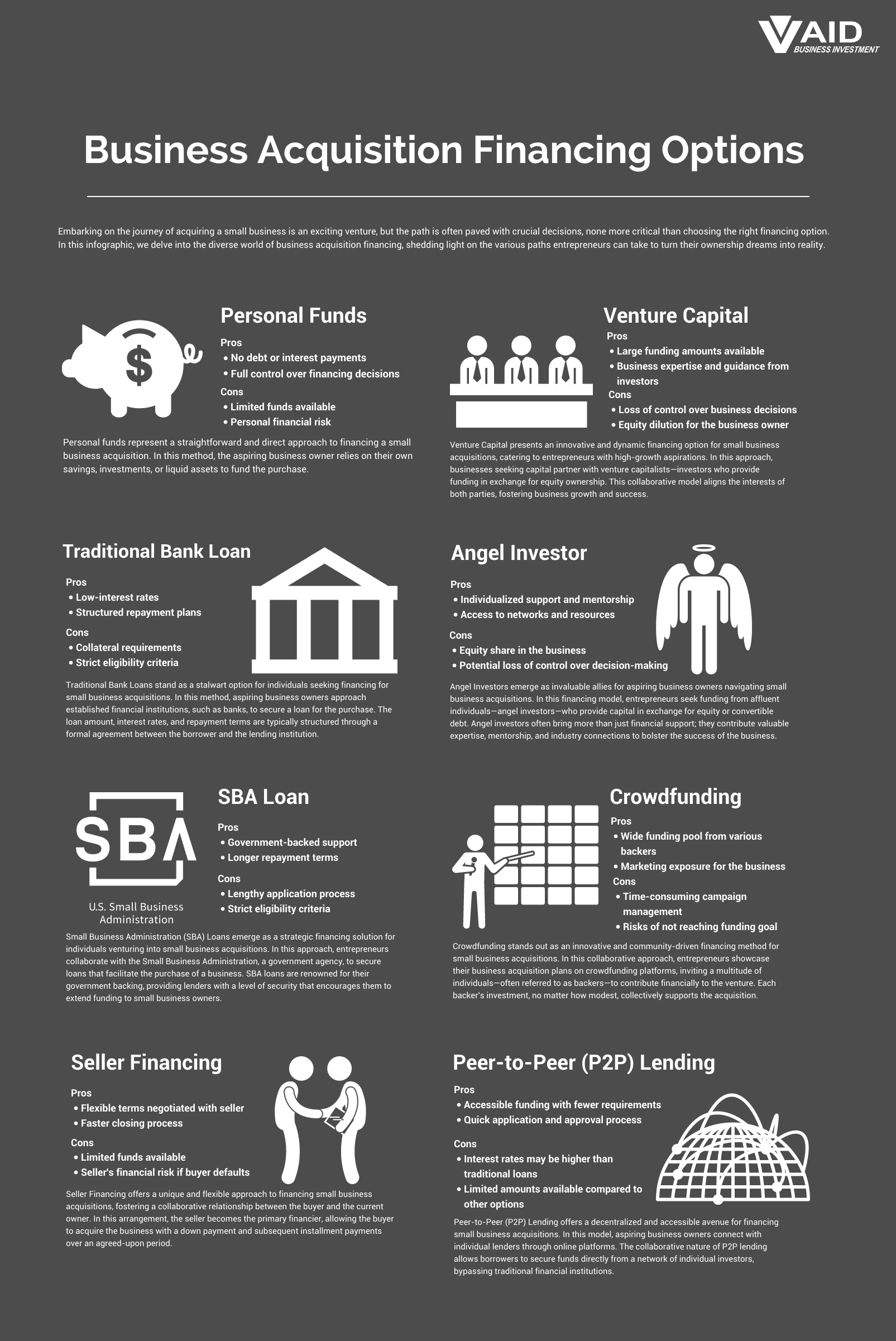
Business Acquisition Financing Options at a Glance
Embarking on the exciting journey of acquiring a business? Understanding the diverse landscape of business acquisition financing options is paramount to your success. In this brief exploration, we’ll shed light on various financing avenues available, empowering you with the knowledge to make informed decisions. Whether you’re a seasoned entrepreneur or a first-time buyer, navigating the financing landscape is a crucial step toward realizing your business acquisition goals. Let’s unravel the possibilities together and pave the way for a successful acquisition journey.
Make Informed Decisions
In conclusion, the realm of Business Acquisition Financing Options offers a spectrum of avenues to facilitate your entrepreneurial endeavors. Whether you opt for traditional bank loans, venture capital, SBA loans, or explore innovative alternatives like crowdfunding or seller financing, each option presents unique advantages and considerations. By carefully assessing your business needs, financial capabilities, and risk tolerance, you can select the financing strategy that aligns best with your goals. Remember, thorough research, diligent planning, and expert guidance are essential components of navigating the complex landscape of business acquisition financing. As you begin your journey to business ownership, feel free to check out our Buying Guide or join our growing network of qualified buyers by completing our Buyer Registration. Armed with this knowledge, you’re well-equipped to embark on your acquisition journey with confidence and pave the way for a successful venture. Here’s to your entrepreneurial success and the realization of your business ownership aspirations!
Read More
How Long Does It Take to Write a Business Plan?
While it might sound cliché, the old adage “you get out what you put in” certainly holds true for business plans. To write an effective plan, and avoid the mishap of producing an ugly baby, set aside the time you need to allow for thorough research, thoughtful analysis, and careful consideration of all aspects of your business. The amount of time required for this task will vary depending on the complexity of your business but be sure to give yourself ample time to complete it. Some may be able to knock it out in under an hour, while others may require weeks to ensure they cover every necessary detail. In this blog post, we’ll explore what goes into crafting a well-thought-out business plan, provide actionable tips for streamlining your writing process so you can hit the ground running faster, and consider whether outsourcing some or all of the work might be right for you. By arming yourself with knowledge about how much time is required to craft an effective document—complete with an investor-friendly executive summary—you can make informed decisions when mapping out your timeline!
Understand Your Goals
When it comes to writing a business plan, it’s crucial to understand your goals and objectives. One of the first steps to take is crafting a powerful mission statement that clearly defines your company’s purpose and values. From there, you need to establish specific goals and objectives that align with your mission. It’s important to take the time to reflect on what’s truly important to you, both personally and professionally, so that you can create a plan that reflects your values and helps you build a successful and fulfilling business. Beyond that, to succeed in any industry, it’s crucial to have a deep understanding of it. That means gathering information not only about your own company but also about your competition and the larger market environment. Additionally, identifying any barriers to entry, such as government regulations or hefty capital requirements, can help you anticipate challenges and plan for success. By doing thorough research and gathering information from a variety of sources, you can position yourself for success in your field.
Establish the Structure of Your Business Plan
After gaining a solid understanding of your goals, and industry, it’s time to establish the structure of your business plan, there are a few crucial components you’ll want to consider. Firstly, you’ll need to think about the daily operation of the business. This includes everything from how the business will function on a day-to-day basis to the roles and responsibilities of each team member. Next up is the location of the business – where will it be based and why? You’ll also need to consider the equipment you’ll need to get your business up and running smoothly, from office supplies to manufacturing machinery. Of course, a business is only as strong as its people, so you’ll need to carefully consider the recruitment and training processes you’ll use to find and nurture the best talent for your enterprise. Additionally, you’ll need to establish clear processes for each aspect of the business, from marketing to finance and beyond. By taking the time to map out each of these key components, you’ll be well on your way to building a robust and successful business plan.
Start Writing Your Business Plan
Now is the time to turn your business idea into a reality by drafting a business plan on paper (or Microsoft Word). Don’t know where to start? No worries! There are plenty of online templates available that can help guide you through the process. A quick Google search will yield dozens of templates that are free to use. Keep in mind that lenders may require their own template, so be prepared to customize your plan accordingly. To ensure your plan is comprehensive and compelling, don’t shy away from referencing other successful plans within your industry as a guide. With a well-crafted plan, you’ll be one step closer to achieving your business goals and securing funding.
Incorporate Visuals Where Appropriate
When it comes to presenting your business plan, visuals can make all the difference. It’s not enough to just have great content; you also need to consider the overall look and feel of the plan. After all, you will be judged by the quality and appearance of your work. Incorporating clear graphics, charts, and diagrams can help make complex information more accessible and engaging to readers. Additionally, visual aids can help you tell a powerful story while highlighting the strengths of your business idea. By taking a thoughtful approach to incorporating visuals into your plan, you can increase the chances that others will be as excited about your business as you are.
Prepare to Present Your Business Plan
When you have finally drafted your business plan, it’s time to turn it into something that can be easily understood. While it’s important to review all your small essays and sections, it’s equally important to ensure that your overall plan flows smoothly. After all, you’ll want to present your plan to potential investors, lenders, or partners who may not have the same level of familiarity with your business as you do. By crafting a well-organized, engaging narrative, you’ll be better equipped to make your case for why your business is worthy of investment. So, take the time to present your plan to yourself or others, polish your plan, eliminate any repetition or filler content, and get ready to make a strong impression. With a clearly articulated vision and strategy, you’ll be one step closer to bringing your business to life.
Seek Feedback Before Finalizing Your Business Plan
At this point, your business plan is complete but don’t fall into the trap of thinking that your business plan is perfect. No matter how much time you invested or how diligently you researched and carefully revised your plan, the baby can still be ugly in the eyes of lenders or investors. With this in mind, experienced entrepreneurs and business professionals will tell you that seeking feedback is crucial before finalizing your business plan. Receiving input from others can help you identify blind spots, refine your strategy, and anticipate challenges that you might not have considered. The insights you gain from others can also help you to align your goals with your target market and ultimately pave the way for a successful launch. So don’t hesitate to gather feedback; it could be the key to unlocking the full potential of your business.
“How Long Does it Take to Write a Business Plan”
To revisit the original question, a business plan can be written in just under an hour. This is assuming that the writer has conducted their research prior to starting the task, they possess a deep level of understanding concerning all matters related to their desired business venture and utilize AI tools for assistance. However, in most cases the writer will NOT begin writing a business plan with this level of understanding and will likely need to conduct thorough research to begin crafting an effective business plan, and this is what gives the business plan its real value. The real value of creating a business plan is not in having the finished product in hand; rather, the value lies in the process of researching and thinking about your business in a systematic way. The act of planning helps you to think things through thoroughly, study and research if you are not sure of the facts, and look at your business ideas critically. It can take more time than anticipated, but the more time spent crafting a solid business plan will pay off in the long run. If you are looking for the right business opportunity to make your plan worthwhile, don’t hesitate to contact V-AID. We can help match entrepreneurs with the best opportunities in today’s modern economy. Writing a business plan is an exciting process, and we look forward to helping bring yours alive!
Read More
