

How to Sell a Business: Before, During, and After
Are you researching how to sell a business? Selling a business is an intricate process involving complex legal and financial documentation and negotiations. It can be overwhelming for even the most experienced entrepreneurs; luckily, there’s help available in the form of certified business brokers from companies like V-AID to ensure that businesses change hands smoothly and successfully. In this blog post, we will provide a comprehensive overview for readers interested in learning how to sell a business by providing tips, strategies, and what to expect when selling a business—from start to finish.
Before Selling Your Business
There are multiple key decisions and considerations to be made before listing your business for sale. It’s helpful for sellers to understand what to expect and prepare for in order to ensure a smooth business transaction. Preparing to list your business for sale is undoubtedly the most exhaustive task for a business owner. Despite the clear benefits and advantages, it’s not uncommon for a business owner to decide to sell with little to no preparation. In these cases, while it’s still possible to reach a favorable deal by working closely with a professional business broker, it can present a lot of unnecessary frustration and confusion throughout the business transaction. If you desire a smooth transaction with the best results, it’s always best to prepare. Let’s discuss the many ways a business owner can approach this.
Key Considerations Before Exiting Your Business
There are many considerations a seller should take into account before placing their business on the market. Neglecting to consider certain factors before selling can have a lasting impact on business value and interfere with personal goals post-transaction. Let’s discuss some of the key considerations for business owners learning how to sell a business:
Timing is Key
When it comes to selling your business, timing is vital. Understanding market conditions and how they can impact the value of your business for sale will help you make the best decision for your future. Economic factors, industry trends, and the competitive landscape all play a role in determining the right time to sell. It’s essential to have a clear understanding of your business’s financials, as well as its market position, to accurately assess its value potential. Keep in mind the length of time it takes to sell a business can vary widely depending on multiple factors, including size, industry, and location. Additionally, your business may not be ready to sell, especially if you own a newly built or acquired business; the financials may not be mature enough to prove to a potential buyer that your business is a reliable investment. Experienced professionals can help guide you through the selling process and provide valuable insights on timing and market conditions to ensure you get the best possible value for your business.
Consider Seller Financing
As a business owner, you’re no stranger to the financial challenges and risks of entrepreneurship. That’s why it’s essential to consider all financing options available to help sell your business. One of those options is offering seller financing to potential buyers. By providing financing, prospective buyers have more flexibility and ease purchasing your business. Additionally, by acting as the lender, you have control over the terms and conditions of the financing, enabling you to secure favorable rates and reducing the risk of default. Make sure to fully evaluate the legal and financial implications of selling financing before proceeding, but know that it can be a valuable tool to help sell your business in today’s competitive market.
Consider Your Level of Involvement Post Transaction
When considering the sale of your business, it’s crucial to consider your level of involvement after the transaction. Some buyers may request you to stay involved for a certain period to ensure a smooth transition. This could involve training, customer outreach assistance, or other business operations tasks. It’s also essential to consider your desires and needs, as you may prefer to step away entirely or have limited involvement. Ensuring that you and the buyer are on the same page regarding post-transaction involvement can help ensure a successful sale and transition.
Consider the Emotional Impact
You’ve put in countless hours, possibly even shed a few tears, and likely drank a lot of coffee along the way. But now, it’s time to consider the emotional impact that selling your business may have. It’s not just about the money; it’s about saying goodbye to something you’ve poured your heart and soul into. It’s like breaking up with a significant other but with more spreadsheets and less romance. All jokes aside, it’s essential to take the time to consider how selling your business will affect your emotions before making any big decisions. You don’t want to be the seller that backs out on the day of closing the deal at the last possible second because you didn’t prepare yourself to let your business go. It happens, but it can easily be prevented and save a lot of valuable time, money, and energy.
Hire a Business Broker!
Business brokers play an invaluable role in the buying and selling of businesses, and they are a vital resource on how to sell a business properly. They even provide a comprehensive suite of services to business owners looking to offload their establishments. This includes:
- Thoroughly evaluating and appraising the business.
- Creating a marketing strategy to attract suitable buyers.
- Negotiating the sale process.
Business brokers have vast experience in the business world, enabling them to identify valuable opportunities for buyers and provide sound advice during negotiations. With their expertise in sales strategies, they help craft attractive offers that will make it easier for sellers to secure profitable deals with minimal effort. Moreover, they are well-versed in the legal aspects of a successful transfer of ownership, and you can enjoy peace of mind ensuring that both parties are complying with applicable regulations.
Create Efficient and Repeatable Processes with Low Employee Turnover
Business owners looking to attract a buyer should strive to create efficient, repeatable processes that can easily be taught and followed. Doing so will make the business more appealing, as potential buyers will want assurance that their investment is safe. Furthermore, the importance of a strong management team with minimal conflict and a low employee turnover rate cannot be overlooked. A well-trained management team adds immense value to a business, particularly those with few hard assets or resources. Investing in your employees and providing them with the resources they need to succeed is a great way to demonstrate the potential of the business and increase its appeal to other potential buyers.
Create a Detailed Business Plan
Another essential step in this process is creating a detailed business plan that lays out each step a new owner should follow to continue growing the business. This plan should be easily understandable and actionable by a potential buyer after acquiring your business. By creating this plan, you are not only showing potential buyers that you are serious about your business’s success, but you are also ensuring that the transition goes smoothly for both parties. A detailed business plan will not only help you sell your business but also give potential buyers a clearer understanding of what they are getting and how they can grow and succeed with it.
Review Your Lease Agreement
Paying attention to the leasing arrangements associated with the property can save sellers from numerous headaches when selling their business. A good starting point for sellers is to determine the type of lease agreement they have, as this will help communicate the level of responsibility for the tenant and landlord. There are several types of lease agreements. Single net leases require that the tenant pays rent and property taxes. Double-net leases involve the tenant paying rent, property taxes, insurance, and the initial rental cost. Triple-net leases demand that the tenant covers all costs associated with rent, property taxes, insurance premiums, and any maintenance expenses. All parties must thoroughly examine all terms regarding leasing agreements before signing any contracts or sales agreements to avoid any discrepancies or misunderstandings during future negotiations.
Find Out What Your Business Is Worth
Knowing the value of your business is crucial, whether you’re looking to sell or want to assess your financial position. Luckily, there are multiple ways to get a base-level understanding of your business’s worth. Online calculators can be an excellent starting point, and many free and premium options are available. Platforms like BizBuySell and BizQuest offer comprehensive online calculators that can be used to get a rough estimate. However, it’s crucial to remember that online calculators should be used as a guide and do not provide an exhaustive understanding of your company’s value. If you’re looking for a more accurate valuation, consider hiring a professional business broker with experience in business valuations, especially if you are just beginning to learn how to sell a business. A broker can provide a more thorough and precise valuation that considers all the data and analyses across different industry sectors.
Standard Methods for Determining Business Value
Business owners have a variety of approaches when it comes to establishing the value of their business. The most appropriate method will depend on factors such as the size and industry of the company, as well as other details that can be determined through professional consultation with a business broker, bank, or appraiser. By engaging the services of one of these experts, entrepreneurs can gain more significant insights into accurate valuations that reflect their unique business and market conditions. Here are some standard methods that can be used:
Discounted Cash Flow (DCF)
Discounted cash flow analysis is a method of estimating the value of a business based on its expected future cash flows. In DCF analysis, the present value of a company’s expected income is calculated by applying a discount rate to the estimated future income. This approach provides an estimate of the value of the business that incorporates all potential future profits and losses.
One key advantage of using DCF analysis is that it can provide a more accurate estimation of your business’s true worth than other approaches, such as market comparison or asset-based valuation methods. By focusing solely on future cash flows, DCF analysis takes into account all possible sources of income and expense, whereas other methods may not be comprehensive enough.
The biggest drawback to using DCF analysis is its reliance on projected estimates; these estimates could prove inaccurate when it comes time to sell your business. As such, it is vital to use reliable sources for your forecasted data and ensure that any assumptions you make are reasonable. Additionally, if you are considering selling soon, update your projections regularly to remain accurate.
Comparable Company Analysis
Comparable Company Analysis is a popular business valuation method employed by mid-sized to large business owners and publicly traded companies. This method of analysis is used to assess the worth of a company by comparing it to similar-sized businesses within the same industry. The metrics that are used for comparison include price to earnings (P/E), enterprise value to sales (EV/S), price to book (P/B), and price to sales (P/S). These metrics are then used to calculate the CCA ratio, which can show whether or not the business is overvalued or undervalued compared to its competitors. The main advantage of using this method is that it allows the owner of a given business to compare their company’s performance with other similar businesses in their industry. By assessing these figures together, owners can get an unbiased estimation of their firm’s actual market value. Furthermore, they can use this information as a basis for making strategic decisions related to investments in growth or expanding operations. In addition, knowing the actual worth of one’s business enables owners to set realistic goals for future returns on investment.
Precedent Transaction
Precedent transaction analysis is a business valuation method in which the current value of a company is determined by considering the company’s past performance and comparing it to similar businesses, particularly with regard to price. This type of analysis provides a general estimation of what sellers will make from their sale, although it should be noted that accuracy may suffer due to external market conditions. As such, larger businesses must take additional factors into consideration, such as Earnings before Interest, Taxes, Depreciation, and Amortization (EBITDA). This factor adds an extra layer of complexity and further limits the accuracy of precedent transaction analysis as an effective business valuation tool.
Seller’s Discretionary Earnings (SDE)
Small business owners can utilize the multiple of the seller’s discretionary earnings or EBITDA approach to assess the worth of their company. This method is typically used for companies that generate less than $5 million in revenue and are owned and operated by a single individual. To accurately value a company using SDE, it’s essential to be aware of the add-backs associated with the specific business. Add-backs refer to any deductions made on an official IRS document for business expenses that an owner may attempt to claim as personal expenses when calculating their SDE or EBITDA. These documents must remain consistent with what was reported to the Internal Revenue Service (IRS) to receive an accurate valuation from a professional valuation company.
Use Online Marketplaces as a Starting Point to Gauge the Marketplace for Similar Businesses
It’s essential to have a solid understanding of the market before making any decisions. Sellers can benefit from online marketplaces as a starting point for their research. Utilizing online marketplaces such as BizBuySell, LoopNet, and BizQuest are among the top and most trusted online marketplaces for business. These platforms provide a wealth of information on current businesses for sale, including asking prices, industry trends, and financial data. By analyzing this information, you can gain valuable insights into the market and make informed decisions about your selling strategy when learning how to sell a business. It’s always best to do your due diligence and thoroughly research the market before making any significant decisions, and these marketplaces can be an excellent tool to help you do just that.
BizBuySell
BizBuySell is an online marketplace designed to simplify the process of buying or selling a business. With over 100,000 businesses listed for sale, it is a one-stop shop for potential buyers to browse various industries and find a business matching their investment goals. For business owners looking to sell, the platform provides a vast network of qualified buyers and professional brokers to facilitate the transaction. Additionally, BizBuySell offers a range of services, such as valuation tools, legal templates, and other resources to help sellers navigate the complicated process of selling a business. Overall, BizBuySell is an indispensable tool for business owners wanting to sell their companies. It provides a secure platform to market their business and access a vast network of potential buyers.
LoopNet
When business owners are looking to sell their property, the process can be overwhelming. That’s why LoopNet is a valuable tool in your arsenal. As the largest commercial real estate listing service online, LoopNet provides access to a vast network of buyers for your property. With over 5 million monthly visitors and 800,000 active listings, it’s easy to see why business owners turn to LoopNet when it’s time to sell. Beyond its impressive reach, LoopNet offers a suite of marketing tools to help your property stand out, including virtual tours, property flyers, and email campaigns. By utilizing LoopNet, business owners can feel confident that they are getting their property in front of the right people and maximizing their chances for a successful sale.
BizQuest
BizQuest is a renowned online marketplace that assists business owners in selling their businesses, leveraging its advanced technology and resources. But how is it different from other similar platforms like BizBuySell or LoopNet? Unlike BizBuySell, which is exclusively dedicated to business buying and selling, BizQuest also offers a comprehensive range of resources such as valuation, financing, and marketing support. Compared to LoopNet, which mainly focuses on commercial real estate listings, BizQuest caters to all business sectors. Business owners can benefit significantly by using BizQuest as it offers a vast network of buyers, confidentiality, and customized marketing tools, which increases the chances of a successful sale at the right price.
Why Sellers Should Seek a Quality Valuation from a Professional Business Broker
Business brokers offer a variety of services, but one of the most important is business valuations. Proper business valuations require a thorough analysis of the company’s financial records, assets, liabilities, and market trends in order to accurately estimate the asking price for the sale of the business. The broker will take into account current market conditions and industry trends to ensure that they arrive at a fair price for both buyer and seller. They may also look at non-financial factors such as location or customer base that can affect the value of the business. By conducting this comprehensive assessment, businesses can set an appropriate asking price based on their specific situation. A quality business valuation is crucial as overvaluing the company may result in losing any real potential buyers while undervaluing the business can result in leaving money on the table. With the help of a professional business broker, you can ensure your business is accurately valued and competitively priced for sale. Some brokerages offer quality valuation services free of charge.
Prepare Your Business Financials and Documents for Review
As a business owner, you never know when an opportunity to sell your business may present itself. When it does, you want to be prepared to provide potential buyers with a detailed overview of your current financial health. It’s important to keep accurate and up-to-date records of your business financials so that you can quickly and easily provide them to interested parties such as banks or other lenders. This preparation streamlines the due diligence process for buyers and other parties and shows them that your business is well-organized and easy to work with. Don’t underestimate the power of having solid financial documentation – it can mean the difference between a successful sale and a missed opportunity.
Understand the Tax Implications of Selling a Business
There are various tax implications associated with such a major transaction. The Internal Revenue Service (IRS) typically handles the sale of individual assets separately from the sale of the entire company. This means that each sold asset must be categorized as inventory, real property, depreciable property, or capital assets and then correctly assessed to determine whether there is a gain or loss in value before any taxes can be paid. It should also be noted that those who maintain an ownership stake in the company after the sale may experience greater complexity in terms of taxes due to the involvement of private equity firms. To ensure all tax obligations are being met, it is best to consult with an experienced tax accountant familiar with business transactions who can provide guidance and advice on handling these types of transactions.
Prequalify your Business for an SBA Loan
As a business owner looking to sell your business, it’s important to consider prequalifying for an SBA loan. By prequalifying, you can ensure that your business is marketable to potential buyers and that they will have access to the necessary funds to make the acquisition. This helps potential buyers secure funding and offers them peace of mind by demonstrating that your business has met specific financial standards and is a sound investment. Working with a lending institution or SBA-affiliated bank can help guide you through the process and provide valuable insight into how to best position your business to appeal to buyers. Overall, prequalifying your business for an SBA loan is a critical step in securing a successful sale.
What to Avoid When Selling Your Business
We would be remiss not to discuss some of the biggest do-nots and common mistakes among first-time sellers. Business owners often approach business transactions with little idea of what to expect, which can quickly create friction between parties when presented with realistic agreements and offers. There are several things sellers should avoid doing before beginning the task of selling a business:
Avoid Being Completely Unprepared to Sell
This may go without saying, but not every business owner is prepared to sell their business, and a lack of preparation will often translate to a very rough selling process. With the proper preparation and the right mindset, you can make the process as smooth as possible with better results. Before you begin any sale negotiations, having all of your paperwork in order is beyond beneficial. This includes financial statements, legal documents, and any other information about the business that a potential buyer might need. Mindset also matters, be sure to go through with the sale if you decide to do so. It can be tempting to hesitate or back out when things get tough, but this will only lead to more trouble down the line. With these tips in mind, you’ll be better equipped to navigate the challenges of selling a business and achieve the most successful outcome possible.
Avoid Unrealistic Expectations
An essential part of selling your business is setting realistic expectations. You may be hoping to make millions and retire on a private island post transaction; while this may be a possibility for some, it’s not a common situation for most business owners. Try to understand the actual value of your business and who would likely be interested in purchasing it. It’s also helpful to place yourself in the buyer’s shoes and ask yourself if you would be willing to pay for this business, given the current asking price and the quality of the offer. Besides the money, you’ll also want to find a buyer who is compatible with the values and culture of your company. Once you have evaluated what your company is worth and the type of buyer that could be interested, you will be able to approach potential buyers and negotiate a successful sale. You’ll want to choose the best offer and ensure the buyer is qualified to lead the business since you want to ensure that your business will continue to thrive under new ownership. With proper research and preparation, you will be able to set realistic goals for selling your business which should lead to a successful sale and rewarding outcome, both financially and personally.
Do Not Rush the Process
Selling your business can be a big decision, and taking your time with the process is essential. After all, you wouldn’t want to sell your baby before it’s ready to leave the nest! Take the time to evaluate your business’s potential and consider ways to increase its current value and where it could go in the future. Some common approaches to boosting business value include cutting costs to improve operational efficiency, developing an effective marketing strategy, and continuing to invest in new equipment and technology. You want to ensure you’re getting the best possible deal, which means taking your time and weighing the options that work best for your specific business. Of course, circumstances such as health conditions, a tragic loss, or divorce may force owners to sell much quicker than initially planned. But otherwise, take the time to ensure your business is ready for its big debut on the market.
Do Not Cut Corners
Picture this: You’ve worked hard to create and nurture a successful business; now it’s time to part ways. But wait! You’re tempted to forgo professional help in favor of saving a few dollars. However, that could be a costly mistake. Selling a business is far more complex than many people realize, with plenty of details to consider and a long-term impact on your finances. To ensure you get the best deal for your business, hiring an experienced business broker will be invaluable in evaluating your company’s worth, identifying the right buyers, and more. In the end, bringing in the pros will save you substantially more – both in terms of monetary value and peace of mind!
How to Sell a Business: DURING
When you decide to sell your business, it is time to list it on the market. This process can be daunting, given all you are required to navigate, including potential buyers, lenders, and more. However, if you remain committed to the process, all the hard work and effort you put in will pay off.
Find the Right Buyer
Arguably the most challenging part of the business selling process is finding the right buyer. The work of sorting through buyers can create a roller coaster of emotions, from excitement to disappointment and everything in between. It can be helpful to understand the different types of buyers you’ll come across depending on the size and industry of your business. For example, some buyers may seek a strategic acquisition to help them expand their company. In contrast, other buyers may be interested in a lifestyle business providing them with a comfortable income without much effort. Additionally, the size of your business can also play a role in the types of buyers you encounter. Larger enterprises may attract private equity firms or other institutional buyers looking for high-growth opportunities. In comparison, smaller businesses may appeal more to individual buyers looking to become their own bosses. By understanding the different types of buyers that may be interested in your business, you can better position yourself to find the right buyer and ultimately achieve a successful sale.
First Time Buyers
When working with a first-time business buyer interested in acquiring your business, there will be a few hurdles to overcome. First, it’s essential to understand that a first-time buyer may not be familiar with the complexities of the acquisition process. This means that you may need to spend additional time explaining each step of the process and the associated legal and financial considerations. Additionally, first-time buyers may not clearly understand the business marketplace, which can result in unrealistic expectations or hesitation in moving forward. As the seller, providing guidance and resources is essential to help the buyer navigate these challenges and make informed decisions throughout the acquisition process. A successful acquisition can be readily achieved with an experienced and knowledgeable team on both sides.
Strategic Buyers
There are key considerations to keep in mind when selling your business to a strategic buyer. Unlike individual buyers, strategic buyers have a specific purpose in mind for acquiring your business. They may be looking to expand their market share, acquire new technology, or eliminate competition. As a result, negotiations with strategic buyers can be more complex and require additional due diligence to ensure that the acquisition aligns with your goals and objectives. Additionally, strategic buyers often have experienced deal teams and are well-versed in mergers and acquisitions. It is crucial for business owners to also have a knowledgeable team in place to ensure a successful transaction. Overall, selling to a strategic buyer can be highly advantageous, but it is essential to be prepared for the unique challenges that come with this type of acquisition.
Financial Buyers
When it comes to selling your business, working with a financial buyer, such as a private equity firm, can present a particular set of challenges. Unlike strategic buyers, who may have a specific use or synergy in mind for your business, financial buyers are primarily focused on generating returns for their investors. This can create a misalignment of incentives and priorities, as financial buyers may be more concerned with maximizing profitability in the short term rather than investing in long-term growth and sustainability. Additionally, financial buyers often employ complex financing structures, which can add a layer of complexity to negotiations and due diligence. While working with a financial buyer can offer a path to liquidity and potential growth opportunities, it’s essential to carefully consider the unique challenges that come with this type of buyer and ensure that the terms of any deal align with your business goals and values.
Wealthy Family Offices
Working with a wealthy family office can offer several benefits when acquiring your business. With access to significant capital, these investors are typically able to complete deals quickly and with minimal hassle. However, it’s important to be aware of the challenges that can arise when working with this type of investor. One potential issue is a lack of alignment when it comes to goals and objectives. Because wealthy family offices often have a hierarchical structure and decision-making process that may not align with traditional business practices, there may be a disconnect between what they want to achieve with the acquisition and what you believe is in the best interest of your business. A thorough understanding of the family’s values and motivations can help identify potential sticking points and facilitate productive negotiations. By understanding these potential challenges upfront and working to establish clear lines of communication and alignment, you can increase your chances of a successful and mutually beneficial deal with a wealthy family office.
Market your Business to Targeted Buyers
When it comes to selling your business, marketing that is tailored to potential buyers is crucial. One effective way to attract buyers is to craft a blind ad that showcases what makes your business unique and highlights its growth potential. A well-written ad creates a sense of interest and intrigue, prompting potential buyers to reach out for more information. By demonstrating why your business is a solid investment, you can draw in serious buyers who are eager to take the next step. With a professional and informative tone, your ad can showcase all the reasons why your business is the perfect investment opportunity for the right buyer.
Try Reaching Out Directly to the Buyers You Believe Are a Good Fit to Acquire Your Company
In addition to marketing to a broad audience of buyers, direct outreach to potential buyers is a strategic approach that can yield great results. It allows you to identify buyers who are most likely to be interested in the acquisition and start building a relationship with them from the get-go. Additionally, reaching out directly to selected buyers enables you to showcase your company’s unique value propositions directly to the buyers most likely to have a serious interest in acquiring them. While developing a list of ideal buyers requires time, effort, and thorough research, the return on investment can be significant. It’s crucial to be professional, respectful, and transparent in your outreach to ensure that you are taking positive steps toward a successful acquisition. Be sure to consult an experienced advisor who can assist you in crafting a comprehensive outreach strategy tailored to your specific goals and needs.
Maintain Confidentiality Throughout the Process
Maintaining confidentiality is crucial when marketing and selling your business – it can mean the difference between a successful transaction and a broken deal. Leaks concerning the business transaction can cause uncertainty among employees, suppliers, and customers, leading to potential risks to the continuity of the business. Therefore, creating a detailed confidentiality agreement with prospective buyers is paramount. This agreement should outline which parties are authorized to know about the sale and what information can and cannot be shared. Also, sellers should carefully choose advisors and intermediaries with extensive experience handling confidential business information. A diligent approach to confidentiality can significantly enhance the value of a business by preserving its reputation, avoiding speculation, and demonstrating preparedness to potential buyers.
Let a Business Broker Evaluate Potential Buyers
Without a business broker in your corner, finding the ideal buyer for your business can be a daunting and tedious task that requires great effort and patience in order to distinguish reliable buyers from those simply attempting to window shop. Having a qualified business broker by your side can guarantee that only serious buyers who have been appropriately screened engage in the sale process, thus saving time and energy for the seller. The evaluation process of potential buyers is an integral step that must not be overlooked. An experienced business broker will be able to quickly recognize when a buyer is prepared to move forward with the purchase by meeting requirements such as obtaining approval from the landlord, securing loans from a bank, or satisfying franchisor conditions. Working with an experienced broker can immensely benefit sellers in their quest to find the right buyer at minimal cost and effort.
Sign a Carefully Reviewed Asset Purchase Agreement
When entering into a business agreement, it’s essential to establish clear terms with your buyer. This will help ensure both parties are on the same page and reduce the likelihood of any misunderstandings or disagreements. To do this, list what you need from the buyer regarding payment, timelines, and other contract terms. When it comes to payment, decide on the amount, frequency, and any late payment penalties. For timelines, clearly define project milestones and deadlines to ensure timely completion. Other terms, such as intellectual property ownership or limitations on liability, should also be clearly outlined. By establishing clear terms upfront, you can ensure your business relationship with the buyer is successful and stress-free.
Negotiate With the Buyer
One of the most important skills in a successful business deal is negotiation. Negotiating with a buyer can be a delicate and complicated process, but it is crucial to ensure that both parties walk away satisfied with the terms of the deal. Effective negotiation requires active listening, clear communication, and compromise. Both parties should clearly understand their goals, priorities, and limitations before entering into negotiations. By working together to find a mutually beneficial agreement, both the buyer and seller can have confidence in the final outcome of the deal. With patience, flexibility, and a professional approach, negotiations can be a positive experience that leads to a successful partnership between buyer and seller.
Stay Positive
Selling a business is no easy task. It’s like running a marathon, except instead of physical fatigue, you’re drained from all the paperwork and negotiations. But you know what they say, “when the going gets tough, the tough get going.” And the tough also stay positive through it all. It may seem like a never-ending journey, but if you take things one step at a time and remain optimistic, you’ll power through to the other side. Just think of the satisfaction you’ll feel once the business is sold – it’ll be like crossing the finish line and winning the race. So when the going gets tough, just remember to keep smiling and stay focused on that end goal.
After Reaching an Agreement with a Buyer
After you’ve come to an agreement with a buyer to transfer ownership of your business, there’s still more to do. Now it’s time to prepare the necessary paperwork to make the transition official. As a responsible business owner, it’s imperative that all legal documentation is completed accurately and in a timely manner to avoid any potential issues down the road. This may include contracts, agreements, deeds, and other relevant legal documents. Enlisting the help of a legal professional or business broker may be beneficial to ensure that everything is in order and to provide peace of mind during this process. With proper preparation and attention to detail, you’ll be on your way to a successful transfer of ownership.
Conduct a Pre-Closing Review
Performing a pre-closing review is a crucial step in the closing process. It involves carefully examining all the documents and information that will be involved in the transaction. This review ensures that everything is in order and that any discrepancies or issues are addressed before the final day of Closing. It also provides an opportunity for all parties involved to resolve any disagreements that may arise during the preparation phase. This helps to avoid any last-minute surprises or complications, ensuring a smoother and more efficient closing process. By conducting a pre-closing review, you can ensure that your Closing will go as smoothly and seamlessly as possible.
Closing Day
Closing day is an exciting yet nerve-wracking time for both buyers and sellers. It’s crucial to carefully review the final agreements before putting pen to paper. These agreements often include non-compete clauses and intellectual property agreements that can significantly impact the buyer and seller in the future. To ensure a smooth transition, buyers and sellers alike should take the time to read through each document and seek legal advice if necessary. Once all parties are satisfied with the terms, signing the final agreements will signal the successful completion of the purchase and sale agreement.
After the Purchase and Sale Agreement Has Been Signed
Once the purchase and sale agreement has been signed, the process of transferring business ownership is not yet complete. Two critical elements must follow; Corporate Closing and Financial Closing. Corporate Closing entails completing any outstanding legal or business requirements before transferring ownership. This includes obtaining any necessary permits or licenses, paying off any outstanding debts or legal disputes, and ensuring that the company is compliant with state and federal regulations. On the other hand, financial Closing is all about transferring funds from buyer to seller and executing any balance sheet adjustments. In simpler terms, financial Closing is when the new owner takes over the assets and liabilities of the business from the previous owner. These two elements are essential in ensuring a smooth transfer of ownership and safeguarding all parties involved.
Corporate Closing
Corporate Closing is a complex process involving transferring assets or stocks through various approvals and procedures based on the Asset Purchase Agreement. This process requires legal and environmental issue resolution, employee and board member resignations, and lease transfers, among other approvals. Additionally, all warranties must be acknowledged, and stockholders must provide their consent. Given all of these steps, it’s clear that Corporate Closing can be challenging to navigate. However, with a thorough understanding of the process, all parties can ensure a successful transfer of assets.
Financial Closing
As one of the final steps in a financial transaction, a financial closing marks the moment when the necessary legal paperwork has been completed, and funding is officially released to the seller. With all paperwork adequately executed and all accounts set up accordingly, this crucial step ensures that everyone involved is on the same page and all obligations have been met. Whether you are working with a large multinational corporation or a small startup, a financial closing is an essential part of any deal that helps to ensure a smooth and successful transaction.
How to Sell a Business: After
After the business transaction is completed, you’re not quite done. There are a few final details to be addressed before you finally walk away from your business, but the most challenging part is behind you. What’s left is to sort out the financials, clear the air among former employees, offer any assistance the buyer may need to successfully transition into the business, and pursue your personal goals. After everything you’ve experienced thus far, you will be much more acquainted with how to sell a business.
Transitioning Ownership
When it comes to transitioning ownership of a business, it’s crucial to consider not only the legal and financial aspects but also the human aspect. After all, employees are the backbone of any company. Business owners must inform their employees about their future roles under new ownership and provide assistance during the transition period. This doesn’t just mean a simple meeting or memo but rather an ongoing dialogue and open communication. There may be anxiety and uncertainty among employees, and it’s up to the business owner to alleviate those concerns and make the transition as seamless as possible. By prioritizing employees and providing support and guidance to the new owner, they can start off on the right foot and set the tone for a successful future.
Protect Your Profits
After completing a successful sale, you’ll need to take steps to protect your profits from potential tax liabilities. Depending on the individual’s financial situation, goals, and plans after the transaction, financial advisors often recommend diversifying portfolios with investments such as stocks, bonds, mutual funds, real estate investments, and money market accounts. Such diversification can help shield the funds from taxation or significant market losses while still allowing for growth potential over time. A reputable wealth manager can provide helpful advice when planning an investment strategy that best meets individual needs.
Consider Buying Another Business
After selling your business, you are left with many options for retirement or new investment opportunities. Buying another business may be the best option for a seller who is not ready to retire. As a previous business owner, you have a wealth of knowledge and experience that can be applied to grow a new business opportunity to reach even greater heights than before. If you sold your business with the assistance of a business broker, that same business broker can provide access to several resources to acquire the perfect opportunity for you!
Remember to Celebrate
After years of hard work and dedication and the stress of finally selling your business, it’s time to retire and enjoy the fruits of your labor. You can walk away from your business proud, having provided for your employees, customers, and family through honest and ethical practices. If pursuing additional business ventures is no longer of any interest to you, it’s time to make the most of life in retirement! You can take advantage of the freedom that comes with no longer having to worry about securing finances or providing for others. Spend more quality time with friends and family doing activities you love, explore new hobbies, or travel the world. There are endless possibilities to ensure you live a fulfilling and happy life in retirement – now is your chance to embrace them!
In conclusion, if you’ve ever wondered how to sell a business, hopefully now you are better informed. Selling a business requires much preparation and effort. It takes research, proper documentation, and a thorough assessment of business operations to maximize the chance of selling it at a good price. If you are looking to sell your company, remember that there are many steps you should take in advance. You should review market trends, create financial statements, assess your liabilities and assets, review industry trade information, and more. Lastly, don’t forget the biggest tip of all – hire a professional business broker to guide you through this complex process from start to finish! With their experience in the industry and aptitude for planning, they can not only help you prepare but also ensure that every effort is well-executed in order to secure the best buyer for your company at the end of the journey. Do you have a business you wish to exit? Reach out to V-AID today and get started on your road toward a successful exit!
Read More

Private Equity: Considerations When Selling to a Private Equity Firm
Selling your company is a big decision that can have significant impacts on your financial future and the legacy of your business. If you are considering selling your company to a private equity firm, there are several things to consider. This blog post will provide an overview of how private equity firms operate, what deal structures look like, and what involvement you can expect after the transaction. We will also discuss why hiring Dallas business brokers for this type of transaction is advisable.
What is a private equity firm?
Private equity firms are an increasingly popular choice for companies looking to sell their business, but what are they? Private equity firms are investment firms that raise funds from institutional investors, such as pension funds and endowments, to invest in companies of various sizes and industries. As innovation and industry disruption continue to shape the business landscape, the role of private equity groups in driving strategic investments has become increasingly significant. Whether investing in start-ups or established firms, these groups play a vital role in shaping the future of the global economy.
How do private equity firms operate?
Understanding how a typical private equity firm operates can help prepare and leverage your company to reach full value when selling. These investment firms are typically managed by experienced professionals who have expertise in buying and selling businesses. Through rigorous due diligence and strategic vision, private equity firms can unlock value and growth in a wide range of industries. Private equity firms look for companies that have strong growth potential as well as potential for operational improvement. Typically, their goal is to hold onto the company for a few years and then sell it for a higher valuation. However, some private equity firms will acquire and hold well-established companies in the long term. As such, private equity firms are focused on achieving a high return on investment for their investors.
What do deal structures typically look like?
Deal structures can vary significantly from one group to another. Some groups may offer a straightforward buyout of the company, while others may opt for a majority recapitalization. A majority recap can be advantageous for a seller that is interested in keeping a minority stake in the company with the option to sell later but it may entail a level of involvement which we will later discuss. Additionally, private equity firms may offer various value-add services, such as operational expertise and access to their network of contacts. As such, it is essential for companies considering private equity investment to carefully assess the various deal structures on offer and choose the one that best aligns with their goals and objectives.
Determine if private equity firms view your company as a platform or add-on business.
As private equity firms continue to invest in a diverse range of businesses, it is crucial to determine whether your company is viewed as a platform or an add-on business. A platform business serves as a foundation for additional investments and growth, while an add-on business is a complementary addition to an existing portfolio. Understanding where your company falls on this spectrum can impact the level of attention and resources invested by private equity firms. As a professional, it is important to comprehensively evaluate your company’s current position in the market and articulate its potential for growth and sustainability. By positioning your company as a strong platform business, you can better attract and leverage the expertise and resources of private equity firms.
What will your involvement look like after the transaction?
After the transaction has been completed, private equity firms will typically be involved in the management of the company. Their level of involvement will depend on the specific private equity firm. They will often appoint their own board members and executives to help run the company or replace the current management outright. In most cases, they will work closely with the existing management team to implement their growth strategies and improve the company’s operational efficiency. It is important to be comfortable with the level of involvement the private equity firm will have before agreeing to the sale.
Understand potential tax implications before selling.
Selling your company can also have potential tax implications that should not be overlooked. The amount of tax you will owe will depend on factors such as the price allocation, the form of the entity you are selling, and whether the deal is structured as a stock or asset sale. Most private equity firms will have their own CPA, helping them structure the most advantageous deal from a tax perspective. This is where the guidance of a business broker or M&A advisor, as well as a CPA, can be invaluable in helping to structure and negotiate the best deal for you. A skilled CPA can guide you through the complexities of the tax code, help you identify tax-saving opportunities, and clearly understand the costs and tax implications of each proposed deal structure. At the same time, a business broker or M&A advisor can help you negotiate key deal terms, such as the purchase price, earn-out provisions, and the timing and form of payments to minimize tax liabilities. Ultimately, working with a business broker and CPA can help maximize your financial return when selling your business and reduce your tax burden.
Why it’s advisable to hire local Dallas business brokers or M&A advisors.
Now, let’s discuss why hiring professional Dallas business brokers or M&A advisors is advisable for this type of transaction. Selling your company to a private equity firm is a complex process that requires expertise and experience. Some private equity groups may attempt to approach the company owner directly to secure a proprietary deal. While this may seem like the most efficient way with less perceived hassle from third parties, it will typically result in less negotiating power for the seller and receiving a less than competitive price. Local Dallas business brokers can help you navigate the process and ensure that you get the best possible deal. Utilizing their local and national network of buyers, they can help you find the right private equity firm to work with and negotiate favorable terms for the transaction. Dallas business brokers can also help you understand the due diligence process and prepare all the necessary documentation for the sale.
Take measures to prepare your business for sale!
Selling a company to a private equity firm can be exciting and stressful for business owners. As you consider this strategy, you must understand the terms of the deal structure, how the private equity firm intends to grow your company, any impact of a change in ownership on current business relationships, the level of involvement after the sale, and potential tax implications. While there are challenges associated with selling to a private equity firm, getting a good deal for your company is possible by hiring local Dallas business brokers or M&A advisors. Ultimately, it’s up to you as the business owner to see if selling to a private equity partner best serves the business while still providing desired outcomes. So, are you considering exiting your business? Reach out to V-AID today; they have Dallas business brokers and M&A advisors with years of experience navigating and advising companies through selling their businesses with the best results.
Read More

What is Seller Financing, and Why is it a Valuable Tool For Sellers?
Seller financing, also known as owner financing, is a term used when a seller acts as the lender to provide financing to a buyer to help them purchase the business. This financing is done with an agreement that outlines the terms and conditions of the loan, including the interest rate, repayment schedule, and any collateral that may be required.
Owners who plan to sell their businesses may find it challenging in the current market to locate potential buyers willing to pay the full purchase price upfront. To address this issue, sellers often offer financing to potential buyers by allowing them to pay a portion of the total amount due over time, similar to a loan. However, this approach comes with inherent financial risks, which can be mitigated through seller financing facilitated by a business broker. Let’s discuss the key advantages and risks associated with seller financing and the importance of hiring one of the top business brokers Dallas can offer to achieve the best results.
Key advantages of seller financing
Flexibility in your favor
Seller financing can lead to a potentially higher sale price for the business, as the owner may be able to negotiate a higher interest rate for the financing. For example, the seller may accept a lower initial purchase price if the buyer can make up the difference in interest payments over time. This option can be a win-win situation for both the buyer and seller, as the buyer gets the business they want while the seller continues to receive income from the business even after it has been sold.
Reduce taxes
One of the lesser-known benefits of seller financing when selling a business is the tax advantages it can provide to the seller. By choosing to finance the sale of their business, the seller can reduce the taxes they owe on the proceeds from the sale. This is because by spreading out the payments over time, the seller can avoid a large, lump-sum payment and instead pay taxes on the payments as they are received.
Cut out third-party lenders.
Additionally, seller financing can simplify the selling process by eliminating needing a third-party lender, such as a bank. Avoiding the hassle of using a third-party lender can save time and effort by avoiding the lengthy loan applications and due diligence processes that can come with securing traditional financing.
Increase chances of finding the right buyer.
Finding the right buyer is arguably the most challenging task when selling a business. By offering seller financing, more buyers will likely consider acquiring the business. This option can help sellers find the right buyer with the desired qualifications in a shorter time frame.
Risks of Seller Financing
Buyer defaults on payments.
One of the main risks when using seller financing is the possibility that the buyer could default on the payments. To mitigate this risk, the seller should perform a thorough background check on the buyer to ensure they are financially stable and have a good credit history. Setting realistic payment terms that the buyer can meet without difficulty is also essential. Additionally, the seller should retain ownership of some assets as collateral until the buyer has paid off the debt in full.
The business fails under new ownership.
Another risk to consider is that the seller could lose their investment if the business fails after the sale. If the business is managed poorly after the sale, the business may not be able to recover, depending on the severity of the situation. To mitigate this risk, the seller should thoroughly analyze the business’s financial health and operations before selling. The seller should also consider requiring the buyer to sign a personal guarantee, which will make the buyer personally responsible for repaying the debt in case of business failure.
Legal Disputes
One final risk to consider is the potential for legal issues to arise during or after the seller financing process. It’s essential to have clear, detailed contracts that outline all the terms and conditions of the sale and the seller financing, such as Promissory Note, Security Agreement, and Personal Guaranty. The contract should also clearly state the consequences if either party fails to comply with the agreement
The importance of hiring leading professional business brokers Dallas can offer to assist with seller financing.
Business brokers play a vital role in completing transactions that involve seller financing, and there are several business brokers Dallas has available to assist business owners with this process. They serve as intermediaries, connecting sellers with potential buyers, securing mutually beneficial terms, and ensuring that all the legal and financial requirements are met. A business broker can help determine the initial asking price, structure and negotiate the terms of the financing agreement, do all the necessary paperwork, and bring the deal to a successful conclusion. A business broker can help determine the initial asking price and help structure and negotiate the terms of the financing agreement, such as interest rates and repayment schedules, to ensure that they are fair and reasonable. They can also help the seller understand the terms of the financing agreement and negotiate more favorable repayment terms.
Furthermore, there are professional business brokers Dallas stationed with the expertise to assess the buyer’s creditworthiness, which is critical in seller financing. This resource helps the seller evaluate the buyer’s financial capability to make timely and regular payments on the loan. Business brokers help manage the risk of default and protect the seller’s interest by enforcing the terms of the financing agreement and helping ensure that payments are made on time. They can help sellers avoid potential financial losses by conducting thorough due diligence, which examines the buyer’s financial history, industry experience, and business plans. Buyers and sellers can benefit from a more efficient and successful seller financing transaction by leveraging a business broker’s expertise and guidance.
Maximize the benefits of seller financing.
Seller financing is an option that can bring several benefits to business owners looking to sell their businesses. By offering to finance directly to the buyer, the seller can speed up the sales process and increase the likelihood of a successful transaction. It is also a way for the seller to maximize the value of their business, as they can negotiate a higher selling price and secure a steady stream of income after the sale. With seller financing, the seller is acting as a lender, and they can set the terms and conditions of the loan, including the interest rate and repayment schedule. By working with a business broker specializing in seller financing, the seller can ensure that the transaction is structured in a way that benefits both parties but ultimately protects the seller’s interests. This can include putting safeguards in place to protect the seller’s investment and ensuring the buyer has a solid plan for running and growing the business. Overall, seller financing can be a flexible and effective tool for maximizing the benefits of selling a business.
Read More

Selling Business: What You Need to Know
Selling a business can be an exciting yet daunting process, and it requires careful planning and preparation to ensure you get the best value for your company. Whether you’re selling business or enterprise in Dallas, understanding what potential buyers are looking for and engaging the services of an experienced business broker Dallas has available is essential if you want to make sure the sale goes smoothly. Here’s what you need to know about selling a business.
The Importance of Hiring a Business Broker in Dallas
When selling business or enterprise in Dallas, hiring a professional business broker can be an invaluable asset. Business brokers in Dallas have the experience and knowledge to help guide you through the process of selling business successfully. With their expertise, they can provide advice on how best to maximize value for potential buyers, as well as market and advertise your company’s assets effectively. By utilizing the services of a qualified business broker in Dallas, you will be able to ensure that all aspects of the sale are handled professionally and efficiently, from initial negotiations with prospective buyers through closing documents. Furthermore, having a knowledgeable partner by your side during this complex process can help alleviate much of the stress associated with selling a business.
How to Choose the Best Business Broker Dallas Has to Offer
When you are looking to sell a business in Dallas, it is important to choose the right business broker Dallas has to offer. With so many different options available, selecting the best business broker can be a difficult and exhausting task. It is important to take into consideration several factors when making your decision, such as experience and knowledge of the local market. Additionally, research any potential business brokers Dallas has available and make sure they have a good reputation for providing quality service and successful outcomes. By taking these steps, you can ensure that you find an experienced business broker in Dallas who will help guide you through the process of selling your company successfully.
Valuing Your Business: Understanding Its True Worth
As a business owner, understanding the true worth of your business is essential for making informed decisions about its future. Business brokers in Dallas can help you to accurately assess and value your company so that you know just how much it’s worth before deciding whether to sell. With their expertise and experience in the industry, they are well-equipped to provide an accurate valuation of your business based on market trends and other factors such as potential growth opportunities. By working with knowledgeable business brokers in Dallas, you will be able to get a better understanding of the true value of your company and be better equipped to approach negotiations.
Preparing Your Business for Sale
One of the most important steps to take when preparing your business for sale is ensuring that all financial records are up-to-date and organized. Having accurate financials can help you get a better return on your investment and make the process of selling your business much smoother. Working with a qualified business broker in Dallas can be extremely helpful in this regard, as they will have experience helping other businesses navigate through the process of selling their company. They will provide expertise on how to properly evaluate and organize financial data, which could include assessing current revenue streams, calculating potential future earnings, and tracking expenses over time. With their assistance, you’ll feel confident that no detail has been overlooked during the preparation stage of selling business or enterprise.
Selling Your Business to the Right Buyer
Finding a buyer for your business can be difficult, especially if you don’t have access to the right resources. A professional broker has a vast network of contacts and an extensive database of potential buyers who could be interested in purchasing your business. With their expertise and connections, they can help you find qualified buyers quickly and make sure that the sale goes as smoothly as possible from start to finish. By leveraging their knowledge and resources, you’ll have no problem finding a buyer for your business in Dallas or wherever else you are located.
Negotiating the Sale of Your Business
Negotiating the sale of your business can be a complex process, which is why it’s essential to have an experienced business broker in Dallas by your side. A professional broker can act as a skilled negotiator and ensure that you receive the best possible outcome. With their extensive knowledge of the current market conditions and the ins and outs of the negotiation process, they can provide expert advice and guidance that can ultimately lead to a successful sale. All in all, partnering with a business broker in Dallas with negotiating skills and expertise can be a major advantage when it comes to selling business or enterprise.
Closing the Deal: Legal Considerations When Selling A Business
Closing the deal is a critical part of any business transaction, and legal considerations should be taken into account at this stage. The buyer and seller must ensure that all terms of the agreement are accurately documented before signing to avoid potential disputes in the future. It’s important for both parties to understand any applicable laws or regulations which may affect the sale, such as contracts related to intellectual property rights or tax implications. Additionally, it’s essential to consider legal recourse if either party breaches the contract. Experienced business brokers in Dallas provide the expertise to ensure that all legal, financial, and operational issues are addressed. A well-crafted agreement will protect both sides from costly litigation down the line by including provisions such as dispute resolution methods and remedies for non-compliance with negotiated terms. By partnering with an experienced business broker, sellers can confidently close their deals without worrying about unexpected surprises later on.
Selling a Business Made Simple
Selling business or enterprise can be complex, but it doesn’t have to be. Utilizing the right business broker in Dallas can help streamline the sale process and increase your return on investment. If you plan to sell your business now or in the future, you can take steps today and start working with a qualified business broker in Dallas who can provide expert advice and assistance to prepare and help sellers navigate how to sell a business the right way.
Read More
Should you lower the asking price?
Whether you’re selling a car, a house, or a business, it’d only make sense that you’d want to sell for the highest price possible. However, when it comes to selling a business, asking for the highest possible price doesn’t necessarily mean more. There are many variables when it comes to determining the valuation of a business and even unexpected and unforeseeable variables when it comes to selling a business. Some of these variables are not within our control, nor is it something we can factor out when it comes to selling businesses. Some of the things a seller controls when selling their businesses are the asking price, the timing, and how they choose to sell their business.
Variables
Some of the most common variables when determining a business valuation for the purpose of selling are the profitability of the business, assets, the sector the company is in, owners’ hours, etc. Those are variables associated directly with the business, but some variables affect the valuation and the purchase price of the company that is not directly tied to the business itself. According to recent Market Pulse reports (a quarterly survey of market conditions for businesses sold in Main Street and the lower middle market by the IBBA and M&A Source), macro events have brought certain variables into the spotlight affecting business Purchase Prices.
- Labor Shortages
- Supply Chain Disruption
- Interest Rates
- Inflation
- Market
If we look at the charts below, we can see how these variables, such as inflation and interest rates, have affected purchase prices for businesses, which will factor into business valuations as markets adjust.

(Above is a data chart of CPI provided by the U.S. Bureau of Labor Statistics)
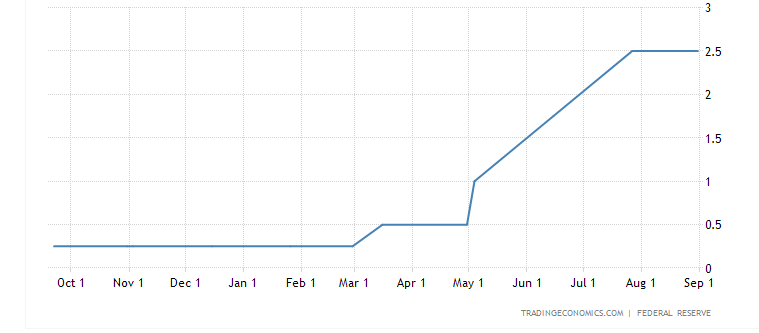
(Graph of fed interest rate from Oct 1st, 2021 – Sep 1st, 2022)
These variables can have a ripple effect as buyers, sellers, and advisors must adapt to the changing market conditions. As these variables impact a business’s profitability and the sellers’ net income, the businesses’ valuation and the purchase price will be adjusted accordingly, thus changing median multiples across the market.
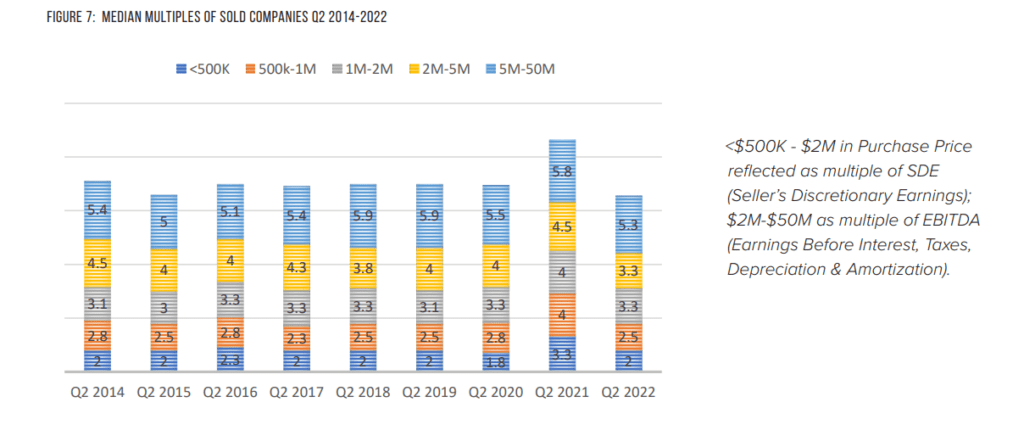
We can see how much of a difference there was when comparing Q2 of 2021 and Q2 of 2022. It’s important to note that these multiples are median, and the multiple will vary depending on the industry. After reviewing these charts, we can see how these variables affect business purchase prices. As inflation started rising, it started eating into business profitability and SDE, followed by the fed trying to tame inflation, thus raising interest rates and pushing out once-qualified buyers from the market. As shown in the chart above, business owners who sold their businesses in Q2 of 2021 received a higher price than those who waited to sell for a higher price. On the other hand, business owners that had listed their businesses on the market declined an offer for lower than the asking price and waited for the total asking price to sell for lower than the offer they received previously as the buyer pool and market multiples has shrunk.
So, lower the price?
Although price can and will play a significant role in anything you sell, especially for businesses, you don’t want to leave any money on the table either. Although inflation has caused interest rates to rise and the median in market multiples to shrink, it doesn’t mean you need to lower the asking price immediately. Current events such as labor shortages, supply chain issues, and rising costs have caused buyers to search for “recession-proof” businesses. Depending on the industry and market sector the company is in, the demand from buyers is much higher and is not affected as much or at all, even though the cost of borrowing and market multiples have shifted.
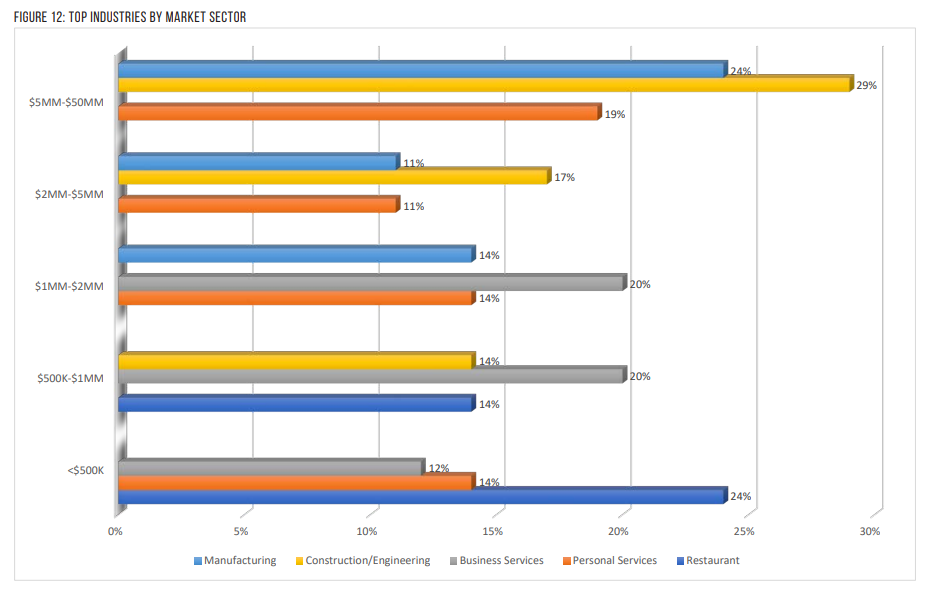
As you can see in the chart above, the top-selling businesses in the market sector of $500k or below were restaurants, while business services were the top sellers in the market sectors from $500k to $2 Million. Finding the correct asking price can be tricky as many variables are involved. Having a reputable business broker and M&A Advisor like V-AID Business Investments assist when selling your business can help determine the valuation of your business and get the best results when it comes to selling your business.
About V-AID
Since 2001, V-AID Business Investment, a team of resilient business brokers and M&A advisors in Dallas, TX, has been specializing in selling small to mid-size businesses in the main street to the lower middle market. V-AID’s experienced team of experts has a proven strategy that will ensure strict confidentiality, a streamlined selling process, and the maximum value for the business. With deep expertise accumulated from hundreds of done deals, V-AID delivers superior results by providing clients with strategic planning and creative solutions tailored to each transaction. Combining V-AID’s proprietary database of buyer networks and industry-leading marketing, V-AID offers a proven selling method that has been the solution to a value-added exit for hundreds of business owners with a completion of 585 transactions totaling over 124 Million Dollars and continuing.
Sources
https://data.bls.gov/timeseries/CUUR0000SA0L1E?output_view=pct_12mths
https://assets.ibba.org/wp-content/uploads/2022/05/IBBA_Q1_2022_Executive-Report.pdf?_ga=2.58834475.761602016.1663699207-584194243.1663163676&_gl=1*1eghuo5*_ga*NTg0MTk0MjQzLjE2NjMxNjM2NzY.*_ga_WCBM3ZRXC4*MTY2MzY5OTIwNi4zLjAuMTY2MzY5OTIwNi42MC4wLjA.
https://tradingeconomics.com/united-states/interest-rate
Read More
