

Financial Readiness for Business Buyers
Buying a business can be one of the most rewarding financial decisions you ever make, but it’s also one of the most demanding. While it’s easy to get excited about potential cash flow, independence, and growth opportunities, the reality is that acquiring a business (especially with financing) involves intense financial scrutiny. Lenders, sellers, and even landlords will want to know you’re not just serious, but financially capable of handling the risk. Before you dive into listings or approach a bank, it’s crucial to take a hard look at your personal financial readiness. In this post, we’ll walk through the key factors that determine whether you’re truly ready to buy a business, especially if you plan to use financing to make it happen.
Understand What ‘Financial Readiness’ Really Means
When it comes to buying a business, being “financially ready” means more than just having some cash in the bank. It means you’re in a strong enough financial position to secure financing, support the business during its transition, and weather potential bumps in the road. Financial readiness is about being loan-worthy in the eyes of a lender and trustworthy to a seller who may be offering financing or staying involved in the transition. It also means being able to take over existing obligations, such as leases or vendor contracts, that may require additional approvals. Ultimately, it’s about reducing risk: both your own and that of any stakeholders involved in the transaction.
Conduct a Financial Readiness Self-Assessment
Before moving forward with a purchase or loan application, take time to do a thorough financial readiness self-assessment. This will help you identify any gaps and avoid surprises later in the process. Start with your credit score, is it 640 or above? If not, improving it should be your first priority. Next, ask yourself whether you have enough liquid assets for a down payment and working capital. Most lenders will expect you to put in at least 15% to 20% of the purchase price, plus have extra cash on hand to support the business post-close.
Evaluate your personal debt as well. If you’re carrying high credit card balances or large personal loans, that could reduce your borrowing capacity or raise red flags. Also consider whether you can cover your personal living expenses for 6–12 months without relying on the business in its early stages. Finally, gather your financial documents, tax returns, bank statements, and a personal financial statement, and review them from a lender’s perspective. Are they organized and accurate? Would they reflect a borrower who’s ready and reliable? If you can confidently check off all these areas, you’re likely in a strong position to begin conversations with lenders or brokers.
If You’re Not Ready Yet, Don’t Worry
If your self-assessment reveals some weak spots, don’t worry, there are clear steps you can take to improve your readiness. Start by focusing on your credit health: pay down high-interest debts, make all payments on time, and consider working with a credit repair specialist if necessary. At the same time, work to increase your savings. This could mean cutting personal expenses or selling underutilized assets. Reducing your personal debt not only improves your financial profile but also lowers your monthly obligations, making it easier to qualify for financing.
If liquidity is a major issue, consider bringing in a partner or investor who can contribute capital in exchange for equity or a return on investment. You might also explore creative financing options such as a Home Equity Line of Credit (HELOC) or look for smaller, more affordable businesses that require less upfront capital. In some cases, it may make sense to delay your purchase by six to twelve months while you strengthen your position. Remember, buying a business is a major commitment. Taking the time now to prepare properly will significantly increase your chances of success, not just in securing financing, but in running a profitable and sustainable business.
Know How Much Money You’ll Need
One of the most common mistakes aspiring business buyers make is underestimating how much capital they’ll actually need, not just to buy the business, but to keep it running and growing. The most obvious cost is the down payment, which is typically 15-20% of the purchase price for an SBA loan. This money usually needs to come from your own savings or liquid assets, although there are some creative strategies (like retirement rollovers or investor partnerships) that can help bridge the gap.
Beyond the down payment, you’ll also need working capital reserves. These funds are crucial for covering payroll, inventory, rent, and other expenses in the first few months of ownership, especially if the business has seasonal swings or cash flow lags. A good rule of thumb is to have at least three to six months of operating expenses set aside. Don’t forget about transactional and professional fees either. Legal reviews, due diligence, loan origination fees, and closing costs can add up quickly, sometimes totaling tens of thousands of dollars, depending on the deal size. Planning ahead for all these costs helps ensure you’re not scrambling for funds during the most critical phase of your ownership journey.
Documentation You’ll Be Expected to Provide
Once you begin the process of financing a business purchase, be prepared to supply a significant amount of personal and financial documentation. Lenders want a clear picture of your financial standing before they approve any funding, and sellers (especially if offering seller financing) may also request some of the same information. At a minimum, you’ll need to provide a Personal Financial Statement (PFS), which outlines your assets, liabilities, income, and expenses. In addition, most lenders require three years of personal tax returns to assess income stability and financial behavior over time.
You should also be ready to share recent bank statements to verify your available funds for a down payment and working capital. If you plan to use funds from a retirement account, home equity, or a partner, documentation of those sources will be needed as well. Buyers often overlook the role of the landlord in this process, but it’s critical if the business operates out of a leased location. In many cases, the lease must be transferred or re-negotiated as part of the transaction, and landlords may conduct their own due diligence. That means they’ll likely review your net worth, liquidity, and credit history before approving the lease assignment. If your finances raise concerns, the landlord may request a larger security deposit, a personal guaranty, or even reject the lease transfer altogether, so be prepared for that additional layer of scrutiny.
Understand Lender Expectations
Lenders don’t just look at numbers, they look at the whole picture. Beyond credit scores and bank statements, they want to see that you’re a capable, low-risk borrower who can successfully operate the business you’re buying. One key element is your professional background. If you have direct industry experience, that’s a major plus. But even if you don’t, transferable skills such as leadership, operations, or financial management can make a big difference in the eyes of a lender. Being able to articulate how your skills align with the business you’re acquiring can strengthen your loan application considerably.
Lenders also want to see that you’re personally invested in the success of the business. This often translates into having “skin in the game”, your own money committed to the deal. A strong down payment shows that you’re serious and helps mitigate the lender’s risk. In addition, lenders look for clean, well-documented business financials from the seller. If the business’s books are a mess or show inconsistent revenue, that could kill the deal, regardless of your own financial strength. Finally, lenders will evaluate the cash flow of the business to determine whether it can comfortably service the loan payments while still providing you with a livable income. All of these factors come together to shape a lender’s decision, and understanding their expectations in advance will give you a major advantage as you prepare to buy.
Final Thoughts on Financial Readiness
Buying a business goes far beyond enthusiasm and ambition. Buying requires a clear, well-documented picture of your financial health and readiness. From assessing your credit and liquidity to understanding lender expectations and hidden costs, every step plays a crucial role in setting the stage for a successful acquisition. Whether you’re ready now or need more time to strengthen your position, approaching the process with diligence and foresight will not only improve your chances of securing financing but also help ensure that your future business venture is built on a solid financial foundation.
Read More
Roles of a Business Owner Can Affect the Business Exit
If you’re a business owner thinking about selling your company, whether soon or years down the road, one important and often underestimated factor will shape how attractive your business is to buyers: your role in the business. The roles of a business owner vary widely, from hands-on operators managing daily tasks to absentee owners overseeing strategic decisions from a distance. Where you fall on this spectrum plays a critical role in your business’s valuation, the size and type of your buyer pool, and the overall success of your exit strategy.
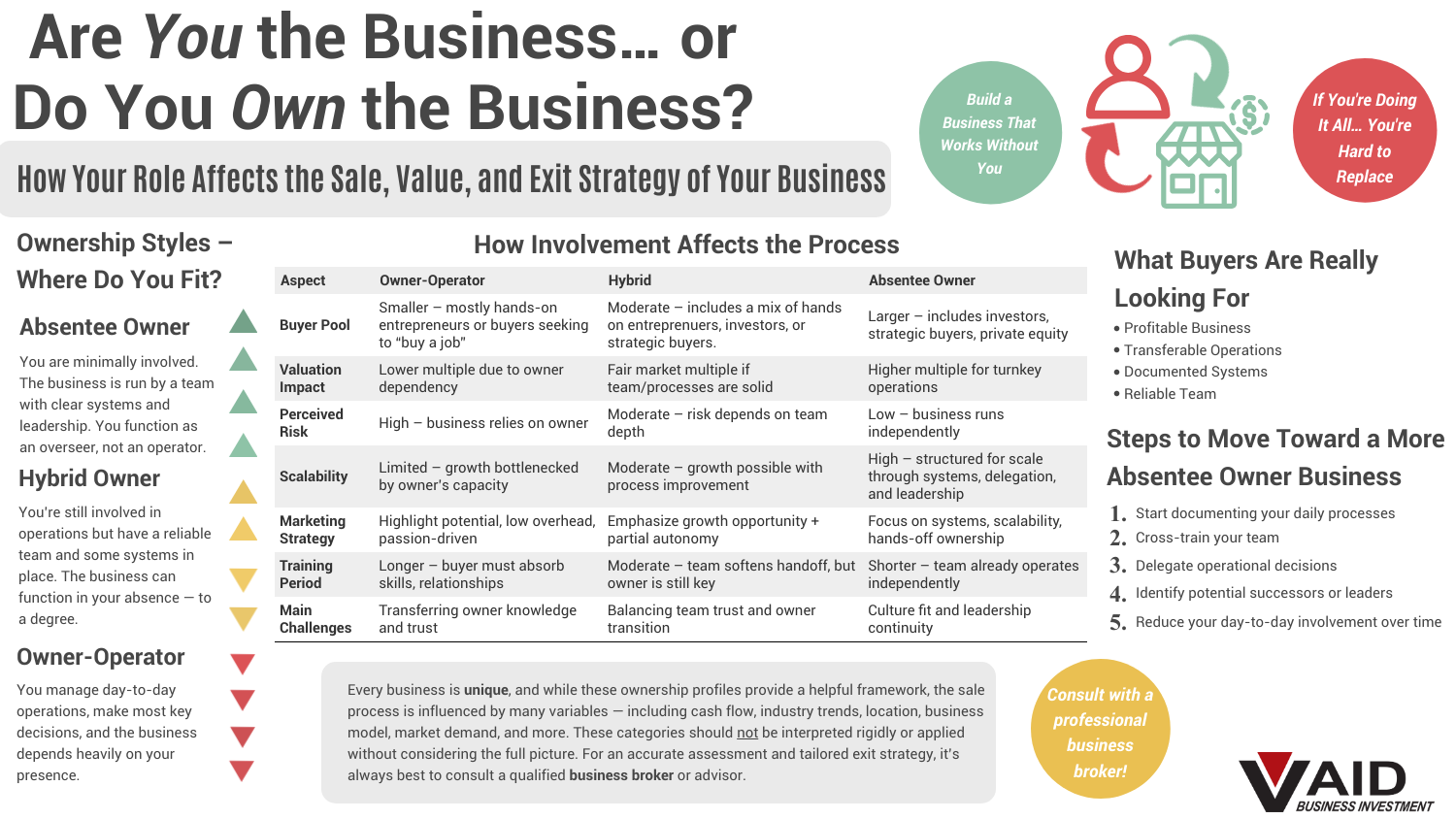
Our latest infographic breaks down these owner roles and explains how they affect everything from perceived risk to training periods during the sale. It offers a clear, visual comparison between common ownership styles: Owner-Operator, Hybrid Owner, and Absentee Owner, and outlines how each one impacts the sale process in unique ways.
Why Your Role Matters
When buyers evaluate a business, they don’t just look at the numbers; they assess how the business operates without you in the picture. Businesses that rely heavily on the owner may limit the pool of qualified buyers and introduce higher levels of perceived risk. On the flip side, companies with strong teams, systems, and less reliance on the owner tend to sell faster and for more favorable terms.
Our infographic explores how your involvement affects several key aspects of the sale, including buyer confidence, scalability, and marketing strategy.
What Buyers Are Looking For
The infographic also touches on what today’s buyers are really seeking. While every buyer is different, most want a business that runs smoothly, has growth potential, and won’t fall apart without the current owner at the helm. Understanding these expectations can help you better position your business when the time comes to sell.
Thinking About a More Passive Role?
For many owners, the long-term goal is to reduce involvement in daily operations, not only to make the business more attractive to buyers, but also to reclaim time and flexibility. The infographic highlights steps you can take to begin moving toward a more absentee ownership model, even if a sale isn’t on the immediate horizon.
A Note on Flexibility
Every business is unique, and the framework presented in the infographic is meant as a general guide, not a rigid formula. Factors like industry, team dynamics, and company size can all influence how these concepts apply to your specific situation. Before making decisions about your exit strategy, it’s always wise to speak with a professional advisor or business broker who can provide tailored guidance.
The Roles of a Business Owner are Critical
The roles of a business owner don’t just define how you run your business; they shape how others value it, especially when it comes time to sell. Whether you’re an owner-operator today or working toward a more hands-off model, understanding how your involvement impacts your exit options is the first step toward a more strategic, successful sale. Contact a professional business broker to get an accurate valuation and personalized exit strategy.
Read More
Don’t Just Find a Buyer for My Business—Finish the Deal
Don’t Just Find a Buyer for My Business—Finish the Deal
When business owners search for ways to find a buyer for my business, many imagine a smooth, straightforward process: a buyer appears with a compelling offer, asks a few key questions, writes a check, and seals the deal with a handshake. Unfortunately, the reality is far more complicated. Finding a buyer is just the first step in a lengthy, often challenging process. The real work begins after the initial offer, as both parties must overcome a series of financial, legal, and logistical obstacles to reach the closing table. Deals frequently fall apart in this phase, where interest doesn’t always translate into action. That’s why having an experienced professional on your side can be the key to turning a potential sale into a successful transaction.
In this blog, we’ll unpack the critical difference between simply finding a buyer and actually closing a business sale. We’ll highlight common pitfalls that can derail deals and explore how a seasoned business broker can help navigate these challenges to ensure the deal reaches the finish line.
Seller-Side Issues: Why “Find a Buyer for My Business” Isn’t Enough
An important milestone to accomplish in the business sale process is to “find a buyer for my business”. Still, what could be surprising is that several common seller-side issues can prevent the deal from actually closing. These challenges can range from unresolved legal and financial matters to poor negotiating strategies, and they often arise unexpectedly during the final stages of the transaction. Let’s explore some of the key seller-side obstacles that can derail a deal:
Lack of Time
Selling a business is a time-intensive process that requires consistent communication, document preparation, and coordination with multiple parties, including buyers, brokers, attorneys, lenders, and landlords. Many business owners underestimate the time commitment involved and struggle to keep up with the pace of the transaction while still running day-to-day operations. Delays in responding to requests, providing documentation, or participating in critical discussions can cause the deal to stall, frustrate buyers, and ultimately jeopardize the closing. Time management and prioritization are essential for maintaining momentum throughout the process.
Missing or Messy Financial Records
Another major hurdle for sellers is the condition of their financial records. Accurate and transparent financials are essential for due diligence, as they give buyers the confidence they need to move forward with the purchase. Unfortunately, many business owners struggle to keep accurate or up-to-date financial records, leaving gaps or inaccuracies that raise red flags for potential buyers. Whether it’s unclear profit margins, inconsistent tax filings, or missing documentation, any discrepancies in financial records can lead to mistrust and may cause buyers to back out of the deal entirely.
Poor Negotiating Strategy
Even if the seller has a solid business and interest from qualified buyers, poor negotiation skills can prevent the deal from reaching a successful conclusion. Many business owners, especially those without experience in business sales, may not know how to protect their interests or negotiate the best terms within reason. Without a well-thought-out strategy, sellers might insist on terms or conditions that leave little room to reach a compromise or kill the deal entirely. Suddenly, we are right back at square one, “find a buyer for my business”.
Unrealistic Expectations
For a deal to move forward, the asking price must reflect current market conditions. However, it’s not uncommon for sellers to overestimate the value of their business, which can make negotiations challenging from the start. While it’s completely understandable for owners to want top dollar for something they’ve worked hard to build, an inflated price can quickly lead to stalled discussions and buyer frustration. If the price exceeds what the market or a qualified buyer is willing or able to support, the transaction is unlikely to progress. Without objective, professional guidance, sellers may have difficulty bridging the gap between their expectations and reality, increasing the risk that the deal falls apart before it ever reaches the closing table. This is why many business owners often find success in consulting a professional rather than a basic online calculator that may not consider several key factors that add or minimize your true business value. It is also a good practice to familiarize yourself with the latest market insight reports to realistically gauge the market for business transactions.
Over Personalized Business
In some cases, a business has been built so closely around the seller’s personal systems, style, or relationships that it becomes difficult for a buyer to envision stepping in. Whether it’s informal processes that only the seller understands, key client relationships tied directly to the owner, or a highly customized workflow that lacks documentation, an over personalized business can be a major red flag. Buyers may feel uncertain about their ability to replicate the seller’s success without significant retraining, restructuring, or added costs, causing hesitation or even deal abandonment. Preparing a business to be transferable, with clear systems and reduced owner dependence, is essential for a smooth transition and ensuring the deal stays afloat.
Buyer-Side Challenges: Why Even Interested Buyers Don’t Always Close the Deal
While a buyer may express interest in acquiring a business, several factors can prevent the transaction from successfully reaching the closing table. After the task of “find a buyer for my business” has been accomplished, it’s normal to feel excited, anticipating a smooth closing. However, even when prospective buyers are enthusiastic, they often face significant hurdles that can derail the deal. These challenges include qualifications, due diligence, and the complexity of the entire process. Let’s take a closer look at these common buyer-side issues.
Unclear Criteria or Lack of Direction
A common issue that can derail a business transaction is when a buyer doesn’t have a clear understanding of what they’re actually looking for. Many first-time or inexperienced buyers begin shopping for business opportunities without well-defined goals, only to lose interest as they learn more about the specific business. What may seem appealing at first—like owning a café, laundromat, or service-based company—can quickly lose its appeal when the buyer realizes the day-to-day operations, required skills, or working hours don’t align with their preferences or lifestyle. This lack of direction can waste time for everyone involved and cause deals to fall apart late in the process. Buyers who don’t take the time to clarify their interests, strengths, and long-term goals before entering the market are much more likely to become what’s commonly referred to as a “window shopper” or “tire-kicker”.
Inability to Bring Capital to the Closing Table
Buyers often encounter significant challenges when it comes to bringing sufficient capital to the closing table. A common issue is the overestimation of their ability to secure the full amount needed, leading to last-minute shortfalls that can jeopardize the entire transaction. Acquiring a business typically involves more upfront capital than anticipated, not just for the purchase price, but also for working capital, legal fees, and other closing costs. Even high-net-worth buyers can face this problem if their wealth is tied up in illiquid assets or other areas, making it difficult to access the cash needed in time. Without a clear and realistic financial plan in place, buyers risk missing key deadlines or being unable to meet their obligations when it’s time to close. These delays can cause sellers to lose confidence, open the door for competing offers, or result in the deal falling apart altogether.
Lack of Qualifications
While financial strength can overcome most obstacles, a lack of qualifications or experience on the buyer’s side of a business transaction can be a major dealbreaker, even if the buyer has sufficient funds to cover a down payment. Many landlords, franchisors, and financial lenders require more than just financial capability—they also expect the buyer to have relevant industry knowledge or business management experience. Without this, landlords may be reluctant to approve a lease transfer, fearing the buyer may mismanage the property or fail to sustain the business. Similarly, franchisors are often protective of their brand and require new owners to meet strict standards to ensure consistency and success. Lenders, too, evaluate the buyer’s background to assess the risk of default; if a buyer lacks a proven track record, they may deny the loan altogether. In short, experience can be just as critical as capital in gaining the approvals necessary to finalize a business deal.
Inability to Conduct Proper Due Diligence
Due diligence is one of the most important steps in buying a business—it’s the buyer’s opportunity to verify the financials, assess the operations, and uncover any potential red flags before finalizing the deal. However, some buyers—especially those who are inexperienced—don’t have a structured approach or the right support to conduct a thorough review. This can lead to major delays, missed details, or last-minute surprises. For example, a buyer might overlook tax liabilities, unresolved legal matters, inflated revenue figures, or operational challenges that weren’t obvious at first. Without a clear plan or the right professional guidance, these mistakes can surface late in the process, shake the buyer’s confidence, and ultimately cause the deal to fall apart.
Unreasonable Requests on the Seller
Buyers can unintentionally put a deal at risk by making too many demands on the seller. Some buyers treat the purchase like a real estate deal, asking for things that aren’t typical in a business sale, like replacing bathroom furnishings, repainting walls, fixing ceiling tiles, or making cosmetic upgrades before closing. Others treat the deal like a large corporate merger, asking for unnecessary details such as the names of every customer, individual receipts for every past repair, or an overly detailed breakdown of each menu item or product sold. While it’s fair to expect that major equipment works and financials are clear, focusing too much on minor issues or requesting irrelevant information can slow things down and frustrate the seller. When these requests feel excessive or unreasonable, sellers may decide the deal isn’t worth continuing.
Third-Party Issues: How a Third Party Can Kill the Deal
Third parties play a pivotal role in the success of a business transaction. Without their cooperation and confidence, even the most well-matched buyer and seller can find themselves stuck in a deal that just won’t close.:
Landlord Approval
If the business operates from a leased location, the lease typically needs to be transferred to the new owner. However, landlords are under no obligation to approve the new tenant. They may request new lease terms, demand a personal guarantee, or simply decline the transfer based on the buyer’s credit or experience. Without the landlord’s cooperation, the entire deal can collapse, no matter how eager the buyer and seller may be.
Franchisor Approval
Franchisors have a vested interest in who operates under their brand and may impose strict requirements on potential buyers. These can include financial thresholds, operational experience, or even interviews and training. If the buyer doesn’t meet the franchisor’s criteria or is delayed in the approval process, the deal may be put on indefinite hold or canceled altogether.
Bank or Lender Approval
Even if a buyer is enthusiastic and committed, they often rely on financing to complete the purchase. Lenders will conduct their own due diligence, including reviewing the business’s financial health, assessing the buyer’s creditworthiness, and analyzing future income projections. If the bank determines that the deal carries too much risk or the buyer doesn’t qualify for a loan, the financing can fall through at the last moment, leaving the seller back at square one.
Vendor and Distributor Relationships
Vendors who have long-standing trust with the current owner may view the new buyer as a risk. As a result, they might tighten credit terms, require upfront payments, or reduce flexibility in their agreements. If the seller previously enjoyed favorable terms, such as extended payment cycles or bulk discounts, those perks may disappear, forcing the buyer to put up more working capital just to maintain inventory levels. This sudden shift in cash flow dynamics can complicate the transition and even threaten the buyer’s ability to operate smoothly post-sale.
The Role of a Business Broker: Turning Buyer Interest into a Successful Sale
A business broker plays a vital role in facilitating a smooth and successful business sale. As a transaction professional, the broker serves as the central guide and coordinator, ensuring that all parties involved—seller, buyer, lender, attorney, landlord, and franchisor—stay aligned and on track to complete the deal. For sellers, brokers help navigate the often complex sale process by addressing critical issues before they become roadblocks. This includes managing contingencies like lease transfers and franchisor approvals, organizing financial documentation for due diligence, and ensuring transparency throughout the process. Their experience in deal structuring and negotiation allows them to help sellers create a winning strategy that both maximizes value and minimizes risk. By providing a market-based valuation and setting realistic expectations, brokers reduce friction and create a smoother path to closing.
On the buyer’s side, business brokers are equally essential. They work to ensure buyers are properly qualified—both financially and operationally—and help structure deals that satisfy the goals of both parties. Throughout due diligence, brokers assist buyers in identifying and addressing red flags early, preventing unpleasant surprises that could jeopardize the transaction later on. More than just advisors, brokers act as project managers, coordinating communication among all stakeholders to maintain momentum and avoid delays. Their ability to keep the process structured, organized, and on schedule is often what makes the difference between a failed deal and a successful acquisition. With a broker’s guidance, buyers are far better equipped to navigate the many moving parts of a business transaction and achieve a confident, informed purchase.
In addition to supporting buyers and sellers directly, a business broker also plays a key role in managing third-party relationships, one of the most common sources of deal disruption. Brokers proactively engage with landlords, franchisors, lenders, and key vendors to facilitate approvals, renegotiate terms when needed, and ensure that all necessary documentation is prepared and submitted on time. Their experience allows them to anticipate concerns these parties may have and address them before they escalate into serious issues. By serving as the liaison between all involved stakeholders, a broker helps reduce miscommunication, streamline approvals, and keep the transaction moving forward. This hands-on coordination with third parties is often what keeps deals from falling apart and ensures a smooth transition for everyone involved.
Final Thoughts on The Phrase “Find a Buyer for My Business”
In the world of business transactions, it’s important to understand that “find a buyer for my business” is just the beginning—closing the deal is where the real challenge lies. Between seller-side obstacles, buyer uncertainties, and third-party approvals, there are countless variables that can delay or derail even the most promising transactions. That’s why having an experienced business broker involved is so valuable. A broker not only helps identify the right buyer but also keeps the process on track by managing communication, resolving conflicts, and ensuring that both parties are prepared to meet the demands of the deal. With the right guidance, preparation, and support, sellers can move beyond just attracting interest and successfully close the sale with confidence. If you’re thinking about selling your business, don’t leave it to chance. Contact a trusted local business brokerage like V-AID Group to guide you through the process and help you sell your business the right way.
Read More

When to Sell a Business: Why You Need Time to Prepare
When to sell a business is a significant decision in any entrepreneur’s journey, and it’s crucial to approach this transition with thoughtful preparation. While the decision to sell may stem from a variety of reasons—such as preparing for retirement, pursuing another venture, or capitalizing on market conditions—it’s important to plan your exit strategy well in advance to avoid a rushed sale that could result in a missed opportunity for maximum value.
The Perils of Rushed Business Sales
It’s natural for business owners to want to sell their businesses at a point when the market conditions are ideal, revenue growth is strong, and they’re ready for the next chapter of life. Ideally, a business sale is timed to align with the peak market conditions, the growth trajectory of the business, and the personal readiness of the owner. However, there is a fine line between selling at the right time and waiting too long.
Unfortunately, waiting too long can result in missing the optimal window of opportunity for the sale. Markets fluctuate, and external factors such as economic downturns, industry shifts, or even personal circumstances can impact the timing of a business sale. When these factors come into play, business owners often face the dilemma of selling during a less-than-ideal market or under less favorable personal conditions.
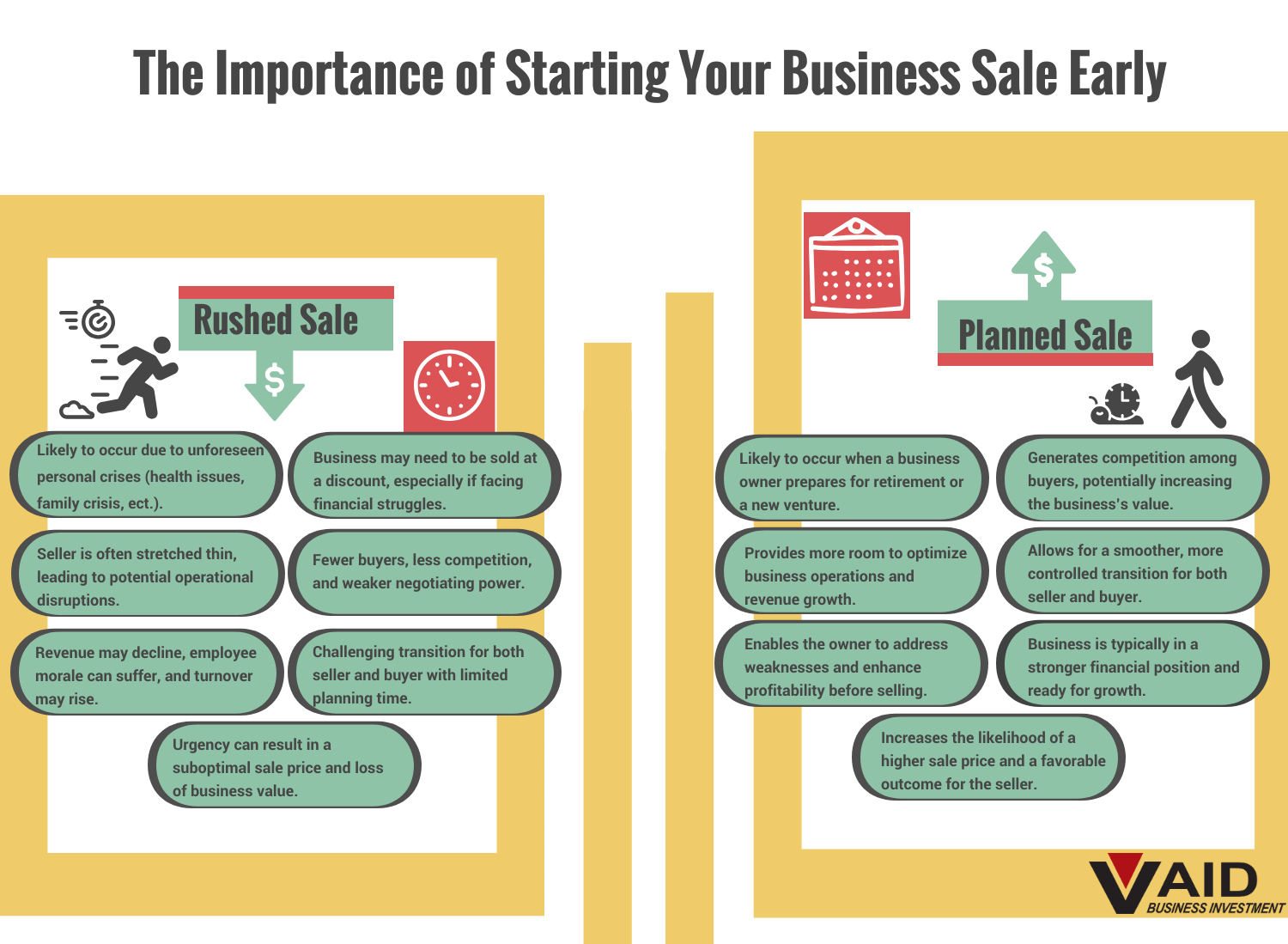
Without proper planning, this could lead to a rushed sale, where the business owner may not have had enough time to position the company to receive the highest possible offer. The rush to market, driven by the fear of missing out or an urgent need to sell, can end in a deal that fails to provide the compensation the business owner deserves.
How a Business Broker Can Help
One of the best ways to avoid the pitfalls of a rushed sale is by planning ahead with the help of a professional business broker. A business broker’s role is not only to help with the sale process but also to ensure that the business is well-positioned for a successful transaction. By consulting with a broker early on, business owners can get an accurate valuation of their company, which provides a realistic understanding of what the business is worth in its current state.
A business broker also brings expertise in timing. They know how to assess market conditions, analyze trends, and identify the optimal time to list a business for sale. Whether it’s market peaks, industry-specific factors, or changes in consumer demand, a broker can advise on the best time to enter the market and, importantly, when to hold off until conditions are more favorable. This foresight can mean the difference between selling at the height of the market or missing the window of peak value.
Beyond timing, business brokers are adept at “packaging” a business for sale. They know how to present the business in the most attractive way to potential buyers—organizing financials, highlighting growth potential, and addressing potential risks. By creating a strong, compelling listing, business owners can increase the likelihood of attracting serious buyers who are willing to pay top dollar.
The Risks of a Lack of Planning
While it’s advisable to sell when the business is performing well and the market conditions are right, many business owners don’t plan their exit strategy until it’s almost too late. Life happens—unexpected challenges, personal circumstances, or shifts in the business can delay the process. Often, owners find themselves needing to sell sooner than anticipated, and without the foresight of consulting a broker, they may rush the sale process in the hope of securing a fair price.
This urgency is understandable but rarely leads to the best outcome. Rushed sales often result in a lower sale price, unfavorable terms, and missed opportunities for both the seller and the buyer. Without proper preparation, business owners may be forced to accept offers that fall short of their expectations, leading to a sense of dissatisfaction and regret.
Planning Ahead: A Key to Success
The key takeaway here is that selling a business is not a decision to be made impulsively or without thoughtful planning. Starting the process early, consulting with a business broker, and understanding the timing and valuation factors that affect the sale can ensure that the business is sold at the highest possible value.
A good plan can also help smooth the transition, whether the owner is moving on to a new venture, preparing for retirement, or simply looking to capitalize on their hard work. In the end, taking the time to plan will pay off in a more lucrative sale and a better long-term outcome.
So, if you’re considering selling your business in the future, don’t wait until the last minute. Consult with a business broker as early as possible, understand the market dynamics, and set yourself up for success. The longer you plan ahead, the more likely you’ll be able to capitalize on the peak value of your business when the time comes to sell.
When to Sell a Business – When You’re Prepared
Selling a business is one of the biggest decisions a business owner will ever make. Proper planning is essential to ensure that the sale happens at the right time and that the business is positioned for maximum value. Working with a business broker early on can help with the valuation, timing, and packaging of the business to achieve the best possible sale price. A rushed sale, on the other hand, is a risk that should be avoided at all costs, as it can lead to missed opportunities and dissatisfaction with the final outcome.
Read More