
Keeping Your Business Listing Up to Date: What You Need to Know
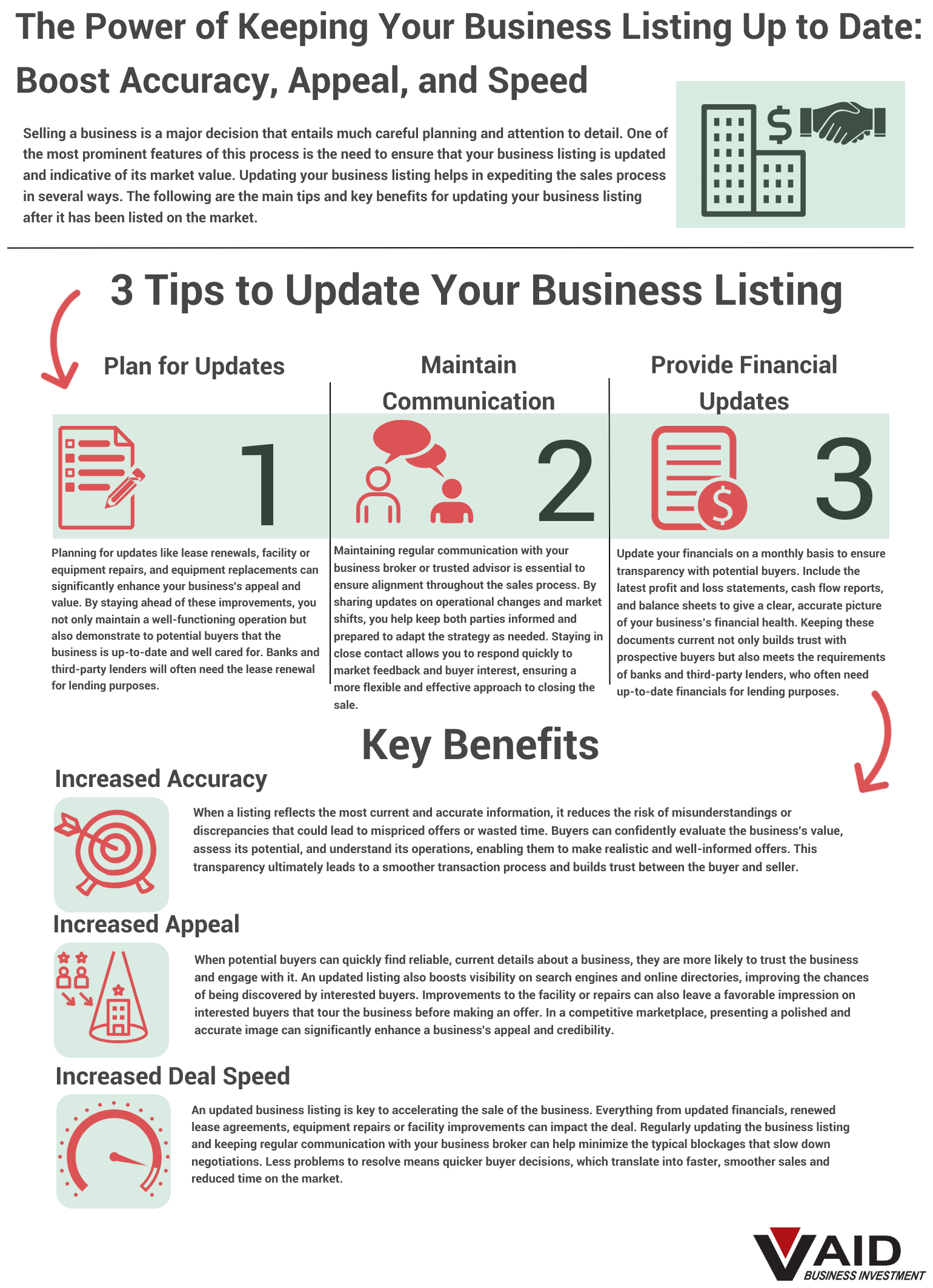
Keeping your business listing up to date is crucial for attracting the right buyers and ensuring that your business stands out in a competitive market. Many business owners overlook the importance of regularly updating their listings on popular online marketplaces like BizBuySell, LoopNet, and others. The reality is, that countless listings remain stagnant, with outdated information that can turn potential buyers away. A listing that hasn’t been updated since posting is much less likely to attract serious interest or lead to a successful sale. By keeping your listing current, you show buyers that your business is actively being managed, which greatly improves your chances of closing a deal. Don’t let your business get lost among inactive listings—ensure yours stands out with fresh, relevant details.
Whether you’re actively working with a business broker or managing the listing yourself, maintaining accurate and current information is key to driving interest and facilitating a smooth transaction. Below, you’ll find an infographic highlighting three essential tips for keeping your business listing fresh, along with the key benefits that come with regularly updating your listing. Take a moment to explore these valuable insights to help optimize your business’s sale potential.

Owner Financing a Business: Be Wary of 100% Owner Financing
Owner financing a business, when used correctly, is a valuable tool that can significantly increase the likelihood of closing a business deal successfully by making the transaction more attractive to potential buyers who may struggle to secure traditional financing. This tool offers flexibility and can facilitate a smoother transition when both parties are motivated to finalize the deal.
To put it simply, owner financing a business involves the seller acting as the lender and allowing the buyer to make payments directly to them over time to buy the business. For buyers, it offers the allure of avoiding traditional loans and maintaining full control over the transaction. Sellers likewise may be drawn to the allure of attracting a larger pool of prospective buyers to quickly close a deal.
However, while we acknowledge owner financing is a valuable tool when used correctly, 100% owner financing is not aligned with industry norms and expectations, and it is rarely a good decision for most business owners or buyers. In this blog, we will discuss a few of the various risks associated with 100% owner financing a business and why it is rarely in the best interest of either party.
Risks for the Seller
Buyer Default
A significant risk for the seller in 100% seller financing is the potential for buyer default. By financing the full purchase price, the seller assumes the risk that the buyer may fail to meet their repayment obligations, which could result in the seller regaining ownership of the business. However, this can be problematic, as the business may be in worse condition or have less value when returned to the seller, making it harder to sell or operate effectively. For example, if the buyer defaults on payments, the seller may have to repossess the business, which can be financially and operationally challenging, potentially leading to further losses and complications.
Increased Liability
Increased liability is another significant risk for the seller in seller financing. If the seller is forced to repossess the business, it can lead to legal and financial consequences. This situation is especially challenging if there are disputes about the condition of the business or unresolved liabilities. For example, if the business becomes distressed and the buyer defaults, the seller may face a lengthy legal process to reclaim ownership, all while dealing with potential operational and financial difficulties. This added liability can be both time-consuming and costly for the seller.
Cash Flow Uncertainty
Cash flow uncertainty makes seller financing even less appealing. Since the seller is financing the full purchase price, they must wait for payments to be made over time, which can create cash flow issues, particularly if the seller relies on the sale proceeds for their own financial needs or retirement. If the seller has already made financial plans or commitments based on receiving the full amount upfront, receiving payments over an extended period may disrupt their cash flow and create unexpected challenges. This delay in payment can strain the seller’s financial situation and complicate their future planning by a large margin.
Risks for the Buyer
Significantly Higher Purchase Price
It is not uncommon for a buyer to pay a higher purchase price with 100% owner financing. Since the seller is assuming all the financial risk by financing the full amount, they may charge a premium for the business or demand higher interest rates compared to traditional financing options, such as bank loans. As a result, the buyer may end up paying more in interest or fees over the life of the loan than they would have if they had secured financing through a bank, potentially making the overall cost of acquiring the business significantly higher.
Financially Straining
Relying on 100% owner financing could place significant strain on the buyer in terms of repayment. Without the assistance of a bank loan or other financial support, the buyer would be left to rely entirely on the cash flow generated by the business to cover the entire debt. This can be particularly risky if the business faces challenges, such as lower-than-expected revenue or unexpected expenses.
Buyers with no equity in the business may find themselves struggling to meet their financial obligations, potentially jeopardizing the future of the company they’ve just acquired. In contrast, a combination of owner financing and external loans provides a more balanced approach, spreading the financial risk and allowing the buyer some breathing room in the early stages of business ownership.
Limited Recourse if the Business Fails
Limited recourse if the business fails is a reality for many buyers undergoing 100% seller financing. If the business does not perform as expected and the buyer struggles to make payments, the seller may have the right to seize the business and its assets, potentially leaving the buyer with nothing. In the event of failure, the buyer could lose any payments already made, and they may not be able to recover their capital once the business is repossessed. This lack of recourse can be financially devastating for the buyer, as they are left without the business and potentially without any compensation for their losses.
Limited Leverage in Negotiations
Limited leverage in negotiations is another real issue for buyers relying on seller financing. Since the seller is providing all the financing, the buyer may have less bargaining power in the deal. The seller essentially holds all the cards, which can result in less favorable terms for the buyer. For example, the seller may impose conditions such as requiring personal guarantees, setting higher interest rates, or including other terms that restrict the buyer’s flexibility in operating the business. These terms can increase the financial burden on the buyer and limit their ability to make decisions or implement changes in the business.
Owner Financing is Fantastic – When Used Correctly
While seller financing in combination with external loans can be critical to a successful closing, offering 100% seller financing is generally not recommended due to the significant risks it poses to both parties. The buyer’s financial instability, potential for default, and lack of leverage in negotiations, combined with the seller’s exposure to cash flow uncertainty and increased liability, can all lead to unnecessary complications.
At V-AID Group, we specialize in helping business owners structure and negotiate favorable terms that balance risk and reward, while also assisting buyers in securing the financing they need. Our deep expertise ensures that both parties are well-positioned to achieve a successful, mutually beneficial transaction.
Read More
Family Business Succession Planning: Sell or Pass it Down?
As a family business owner, one of the most important decisions you’ll face is whether to sell your business or pass it down to the next generation. This choice isn’t just about financial outcomes—it’s about your legacy, your family’s future, and your personal goals.
Whether you’re approaching retirement, facing health challenges, or simply contemplating what’s next for your company, this decision will shape the future of the business you’ve worked hard to build. For many, it’s a crossroads that comes with a mix of emotions, from the desire for personal freedom to the wish to keep the business in the family.
Family business succession planning plays a pivotal role in this decision-making process. It’s not just about choosing who will take over, but also about ensuring that the transition is seamless and sustainable. Should you sell your family business for a potential financial windfall, or should you pass it down, preserving the family legacy?
Both options come with distinct advantages and challenges, and what works for one business owner might not work for another. In this blog, we’ll explore both sides of the decision—selling versus passing down—and help you understand how to make the right choice for your unique situation.
The Case for Selling Your Family Business
For many business owners, selling their family business can provide a fresh start and a sense of financial freedom. The most immediate benefit of selling is the potential for a significant financial payoff. If the business has reached its peak value or operates in a thriving market, the sale could provide the capital needed to secure your retirement or fund new ventures.
Beyond the financial aspect, selling can offer personal freedom, allowing you to step away from the day-to-day responsibilities of managing the business. This can be especially appealing if you feel the burden of running the business has become overwhelming or if you’re simply looking to move on to other interests in your life.
Additionally, selling might be a strategic move if market conditions are favorable. In some industries, high demand from buyers or favorable economic factors can make it an ideal time to sell.
A well-timed sale can maximize your business’s value and ensure that you get the best return on your years of hard work. For those looking for a clean break, selling can offer a simplified exit strategy, freeing you from the complexities of transitioning the business to a new generation, especially if there are no interested or capable heirs to take over.
The Case for Passing Down Your Family Business
On the other hand, passing down your business to the next generation can offer a deeply rewarding experience, both emotionally and practically. For many business owners, the desire to preserve their legacy is a key motivator.
Passing the business on allows you to see the next generation continue the work you’ve built, ensuring that your values, traditions, and entrepreneurial spirit are carried forward. It’s also a way to keep control within the family, avoiding the uncertainty that might come with selling to an external party. A successful transition can maintain stability for employees, clients, and the community, all while reinforcing your family’s reputation and role in the business.
Passing down a family business can also bring significant tax advantages, particularly if the business is structured in a way that allows for estate tax exemptions or other financial benefits. With proper succession planning, you can minimize tax liabilities for your heirs, ensuring the business continues without the burden of excessive tax costs.
Key Considerations for Family Business Succession Planning
Before making the final decision between selling or passing down your business, there are several key considerations to evaluate. First and foremost, consider the readiness of the next generation. Are your children or other family members interested in taking over the business?
Do they have the skills, passion, and ability to lead it into the future? If they’re not prepared or willing, passing the business down could result in a loss of value or operational disruptions. On the other hand, if you don’t have a suitable successor in the family, selling might be the best way to ensure the business continues thriving under new leadership.
Another important factor to consider is the current and future viability of your business. Is your business in a strong position to grow and prosper under the guidance of new family leadership, or has it reached a point where selling it makes more sense?
Additionally, think about your personal goals—do you envision a future that involves staying involved in the business, or are you looking for more freedom and flexibility?
Your financial needs, retirement plans, and lifestyle preferences will also play a significant role in this decision. Understanding these factors will help you make a more informed and confident choice that aligns with both your personal and professional goals.
How to Prepare for Both Scenarios
Once you’ve considered the key factors, it’s time to start preparing for either scenario. If you decide to sell your business, the first step is to get a proper valuation.
Understanding the worth of your business is critical for setting the right price and negotiating with potential buyers. You’ll also want to ensure that your business is operating at peak efficiency, with solid financial records, a strong customer base, and a sustainable model that will attract buyers. Working with business brokers or M&A advisors can help you find the right buyer and guide you through the complex sale process, from negotiating terms to finalizing the deal.
If you choose to pass the business down, it’s equally important to create a well-thought-out succession plan. This involves more than just deciding who will take over—it requires preparing your heirs for leadership roles, often through training, mentoring, and involvement in day-to-day operations well before the transition takes place.
Legal and financial advisors are essential for family business succession planning that addresses potential tax implications, ownership structures, and family dynamics. Clear communication with your family about roles and expectations is key to avoiding misunderstandings down the road. In some cases, a hybrid approach might be worth considering—selling part of the business while passing down ownership of the rest—to strike a balance between securing your financial future and maintaining a family connection to the business.
Professionals for Family Business Succession Planning
Whether you decide to sell or pass down your business, consulting the right professionals is essential for making an informed decision and executing your plan successfully. Financial advisors, accountants, and legal experts can help you navigate tax implications, legal structures, and financial planning, while a business broker brings specialized expertise for selling your business—focusing on marketing, finding qualified buyers, and negotiating the best terms.
If you’re passing the business down, an estate planner can help create a will or trust to ensure a smooth transfer, while a lawyer specializing in family business succession can address potential conflicts and clarify responsibilities. With the guidance of these professionals, you’ll be better equipped to make a well-rounded decision that aligns with both your personal and financial goals.
Making the Right Choice for You
Ultimately, the decision to sell or pass down your business is deeply personal and depends on a variety of factors, including your financial goals, family dynamics, and the future potential of the business. There is no one-size-fits-all answer.
For some business owners, the opportunity to cash out and enjoy the fruits of their labor through a sale is the most appealing option. For others, passing the business down to the next generation offers a sense of fulfillment, legacy, and continuity. Both paths have their pros and cons, and what matters most is making the choice that aligns with your vision for the future.
As you weigh your options, take the time to assess both your personal aspirations and the practical realities of your business. Don’t hesitate to consult with professionals who can help guide you through the decision-making process. Whether you sell your business or pass it down, with careful planning and the right support, you can ensure that your decision benefits both your legacy and your financial future. The key is to start early, plan thoroughly, and choose the option that best serves your long-term goals.
If you’re considering selling your business, V-AID can be your selling guide to help you navigate the process with confidence. With over 20 years of experience serving business owners across various industries and sizes, we offer expert guidance tailored to your unique needs. Our team is committed to providing a seamless experience, starting with a free consultation and no upfront fees—making the decision to sell your business straightforward and hassle-free. Let us help you maximize your business’s value and achieve your goals.
Read More
Local business brokers: Why you should consider one
Choosing the right business broker is essential to ensure a smooth and successful transaction. While there are many brokers to choose from, working with a local business broker offers distinct advantages. Local brokers are familiar with the regional market dynamics, have a network of local buyers and sellers, and understand the unique challenges businesses in the area may face. This familiarity can result in quicker, more efficient deals and a higher likelihood of finding the right buyer or seller. This article will explain why local business brokers are a smart choice for both buyers and sellers, highlighting the key benefits they bring to the table.
In-depth knowledge of the Local Market
Local business brokers possess in-depth knowledge of the local market, offering valuable insight into industry trends, pricing, and customer behavior that can significantly impact a sale or purchase. They are familiar with the nearby community, allowing them to provide tailored advice that reflects the specific needs of local businesses. This expertise helps brokers navigate regional challenges, market fluctuations, and emerging opportunities, ensuring clients make informed decisions and maximize their chances of success.
In addition to market trends, local brokers are well-versed in the region’s valuation standards, which enables them to accurately assess the worth of businesses. Their familiarity with local benchmarks ensures they price businesses fairly and competitively, considering what buyers are willing to pay and what sellers can reasonably expect. Furthermore, local brokers have access to an extensive network of buyers and sellers within the area, allowing them to efficiently match businesses with the right prospects and accelerate the transaction process.
Stronger Local Connections and Network
Local business brokers typically have established long-standing relationships with key professionals in the area, such as attorneys, accountants, and lenders, who play an essential role in business transactions. These connections allow brokers to quickly coordinate with these professionals to address legal, financial, and logistical needs that arise during the process. Their familiarity with local experts ensures a smoother flow of communication and helps mitigate potential roadblocks that could delay a deal.
Moreover, these strong relationships with local professionals can significantly expedite the sale or purchase process. By having a trusted network of experts readily available, brokers can streamline negotiations, ensure that all documentation is in order, and facilitate access to necessary financing. This network not only contributes to faster transactions but also provides clients with confidence that knowledgeable and reliable professionals are handling every aspect of the deal. Additionally, local brokers maintain a large database of potential buyers in the region, allowing them to match businesses with interested parties quickly. This database of local prospects enhances the broker’s ability to find the right buyer, speeding up the transaction and increasing the likelihood of a successful sale.
Quick Response Time and Local Availability
Local business brokers benefit from being in the same time zone and region as their clients, allowing for faster response times to inquiries and concerns. This proximity reduces delays in the buying and selling process, as brokers can address issues promptly and maintain a continuous flow of communication. Their ability to respond quickly ensures that clients’ needs are met in real-time, minimizing the chances of missed opportunities and keeping the transaction on track.
In addition to quicker responses, local brokers are well-positioned to provide immediate assistance with any logistical or operational issues that may arise during the transaction. Their familiarity with local service providers enables them to swiftly resolve challenges, whether it involves coordinating with contractors, addressing regulatory concerns, or facilitating other on-the-ground tasks. Moreover, their presence in the area allows for greater flexibility in scheduling meetings, site visits, and negotiations, making the entire process more efficient and convenient for all parties involved.
Better Local Buyer-Seller Relationships
Local business brokers often have well-established reputations within their communities, which fosters a sense of trust among both buyers and sellers. Their familiarity with local business practices and their established presence can make clients feel more comfortable reaching out to them. This trust can lead to smoother negotiations, as parties are more likely to cooperate with a broker they know and respect. In many cases, a broker’s reputation within the local market can facilitate better deals by helping bridge gaps and addressing concerns before they escalate.
Additionally, local business brokers have a deeper understanding of the region’s culture and business practices, which is essential for ensuring a smooth transition when a buyer takes over a local business. Their knowledge of operational norms helps buyers integrate into their new lives with greater ease. Furthermore, local brokers are skilled at identifying whether there is a good “cultural fit” between the buyer and the business, which can be a critical factor in the long-term success of the transaction. This cultural insight ensures that the business will continue to thrive under new ownership, benefiting both the buyer and the broader community.
Community Focus and Commitment to Long-Term Relationships
Local business brokers are often deeply invested in the long-term success of both their clients and the community, as they are invested in the region’s growth and success. Their commitment to the area means they are more likely to approach each transaction with a focus on building lasting relationships rather than just completing a one-time deal. This long-term perspective drives local brokers to ensure that clients achieve their goals and are set up for continued success, creating a sense of trust and loyalty that extends well beyond closing.
In addition to their commitment during the transaction, local brokers often provide valuable ongoing support after the sale. They may offer post-sale services such as helping facilitate a smooth transition, introducing new owners to key local contacts, or providing future business opportunities within the community. This ongoing support ensures that the buyer and seller are well-equipped for the next steps and reinforces the broker’s commitment to the continued success of the business, fostering strong, long-term relationships within the community.
Conclusion
Choosing a local business broker offers key benefits, including a deep understanding of the local market, personalized service, and quicker response times. Local brokers provide accurate valuations, tailored guidance, and faster issue resolution, thanks to their expertise and proximity. Their strong network of local professionals and buyers helps streamline the transaction process. By working with a local broker, business owners and buyers gain access to valuable community connections and ongoing support, ensuring smoother transitions and better outcomes. For a successful sale or purchase, contact V-AID, a trusted local broker who understands the unique needs of your region and is dedicated to achieving the best results for you.
Read More
NDA for Business Sale, Why They Are Essential
A NDA for business sale or Non-Disclosure Agreement is a legally binding contract to protect confidential information shared between parties in a business transaction. Its main purpose is to prevent the unauthorized use or disclosure of sensitive data, such as financial records, trade secrets, or business strategies. In a business transaction, NDAs ensure that all parties involved understand their responsibility to maintain confidentiality, creating a secure environment for open communication. The NDA outlines what information is considered confidential, the obligations of each party, and the duration for which the confidentiality must be maintained, thereby safeguarding valuable assets from misuse.
NDA for business sale is especially critical because it provides both the buyer and the seller with the necessary protection to discuss sensitive information openly. By establishing clear boundaries around what can and cannot be shared, NDAs help prevent leaks of critical business data that could undermine the sale or harm the parties involved. This sense of security fosters trust and transparency during the negotiation process, ultimately facilitating a smoother and more successful transaction. This article will explore why NDAs are essential in business sales, discussing how they protect the interests of both parties and contribute to the overall success of the transaction by ensuring confidentiality and reducing legal risks.
The Essential Role of NDA for Business Sale
Non-Disclosure Agreements (NDAs) play a vital role in protecting confidential business information during the sales process. They are designed to safeguard intellectual property, financial data, customer lists, and other sensitive assets that could be detrimental to a business if disclosed. By preventing the unauthorized use or sharing of this information, NDAs help ensure that the seller’s trade secrets and proprietary data remain secure. This protection is especially important in maintaining a competitive advantage, as NDAs prevent valuable business insights from falling into the hands of competitors, which could potentially weaken the seller’s market position.
In addition to safeguarding sensitive information, NDAs also help build trust between the buyer and seller. By outlining clear confidentiality obligations, NDAs create a foundation of trust that both parties are committed to keeping sensitive information secure. This trust is crucial in fostering honest and transparent negotiations, where both parties can freely share information needed for due diligence without worry. NDAs ensure that any exchange of information during the negotiation process remains focused on achieving a successful transaction while protecting each party’s business interests.
Legal and Financial Protection Through NDAs
NDAs provide critical legal protection by establishing enforceable contracts that bind the parties to maintain confidentiality. These agreements outline the specific terms and conditions under which confidential information can be shared, ensuring that both parties understand their legal obligations. In the event of a breach, the NDA ensures that there are legal consequences, which can include financial penalties or other remedies. This legal framework helps prevent the unauthorized disclosure of sensitive business information and provides a clear course of action if confidentiality is violated, thus reinforcing the seriousness of the agreement.
In addition to legal protection, NDAs significantly minimize the risk of litigation by preventing disputes and lawsuits that could arise from the misuse or leaking of confidential information. Without an NDA, conflicts increase, especially if proprietary information is disclosed to the wrong parties. Financially, the implications of such leaks can be severe, ranging from a loss of client trust to significant regulatory fines or reputational damage. NDAs help mitigate these risks by ensuring that confidential information remains protected, providing both parties with a clear understanding of the consequences of a breach and minimizing the financial risks associated with the transaction.
Practical Benefits of NDA for Business Sale
One of the key practical benefits of NDAs in business sales is the protection they offer against any leakage of sensitive information. During the early stages of a transaction, parties often share critical data such as financial records, business strategies, and operational plans to facilitate discussions and negotiations. Without an NDA in place, there is a significant risk that this confidential information could be prematurely leaked, potentially harming the transaction or the business’s market position. By ensuring that both parties are legally bound to confidentiality, an NDA prevents such leaks, allowing for more secure and productive discussions that protect the integrity of the sale.
NDAs also play a crucial role in facilitating a smooth and secure due diligence process. Due diligence requires the exchange of highly sensitive documents, including contracts, financial statements, intellectual property rights, and other proprietary information. NDAs ensure that these documents are handled with the necessary care and kept confidential, thereby reducing the risk of data misuse. Furthermore, NDAs not only protect the immediate interest involved in the sale but also safeguard the future business prospects of both parties. By preventing competitors from gaining access to confidential product plans or other strategic information, NDAs help preserve the long-term success and security of the business for both the buyer and seller.
How NDA for Business Sale Benefits Both Buyers and Sellers
NDAs provide significant protection for the seller by preventing the unauthorized use or disclosure of valuable intellectual property, proprietary processes, and other sensitive business information. During the sale process, sellers often disclose critical business assets, including trade secrets, client data, and operational strategies. An NDA ensures that this information remains secure and is not exploited by the buyer or third parties. By maintaining confidentiality, the seller’s business value is preserved, reducing the risk of harm to their reputation, competitive advantage, or market position. This protection ensures that the business remains intact and continues to hold its value until the sale is completed.
For buyers, NDAs offer access to the confidential information needed to make an informed purchasing decision. During the due diligence phase, the buyer must evaluate the business’s financial health, intellectual property, and other key assets to assess the risks and opportunities involved. An NDA ensures that the buyer can review sensitive data without the fear that it will be misused or leaked, which could disrupt the buyer’s operations after the sale. Additionally, NDAs create a fair and balanced negotiation environment by ensuring that both parties can share information with confidence, knowing that it will only be used for legitimate purposes related to the transaction. This fosters trust and ensures a transparent and equitable process for both buyer and seller.
Potential Pitfalls Without an NDA
Without an NDA in a business transaction, several potential pitfalls can jeopardize the success of the deal. One major risk is the possibility of miscommunication or misunderstandings between the parties involved. Without a clear agreement outlining the scope of confidentiality, both parties may have different expectations about what information can be shared, leading to confusion or accidental breaches. These misunderstandings can erode trust and cause delays or even derail the transaction altogether. In the absence of an NDA, informal conversations or documents may be misconstrued, resulting in unintended disclosures that compromise the integrity of the sale.
Another significant danger is the lack of accountability. Without the legal enforce ability of an NDA, parties may not feel compelled to adhere to confidentiality standards, increasing the likelihood of information leaks or misuse. Without clearly defined penalties for breaches, there is little incentive for either party to handle sensitive information responsibly. This absence of legal structure can lead to a lack of commitment to the agreement, which may result in a party sharing proprietary information with competitors, stakeholders, or other unauthorized individuals. Such actions could not only disrupt the transaction but also harm the long-term business operations of both parties, leaving them vulnerable to financial and reputational damage.
The Bottom Line
In conclusion, Non-Disclosure Agreements (NDAs) play an important role in maintaining the confidentiality, security, and trust essential for a successful business sale. By protecting sensitive information and ensuring that both parties are legally bound to confidentiality, NDAs create a secure environment for clear negotiations. They help prevent the unauthorized use or disclosure of critical business data, safeguarding intellectual property, financial records, and other valuable assets. In this way, NDAs are not just a formality, but a key element in building trust between the buyer and seller, ultimately contributing to the smooth execution of the transaction.
At V-aid, we prioritize your privacy and confidentiality, whether you’re buying or selling a business. We understand the importance of protecting sensitive information throughout the process and are committed to ensuring your peace of mind. With a focus on discretion, integrity, and support, V-aid is here to guide you every step of the way, offering expert assistance to help you successfully buy or sell your business while safeguarding your interests.
Read More